
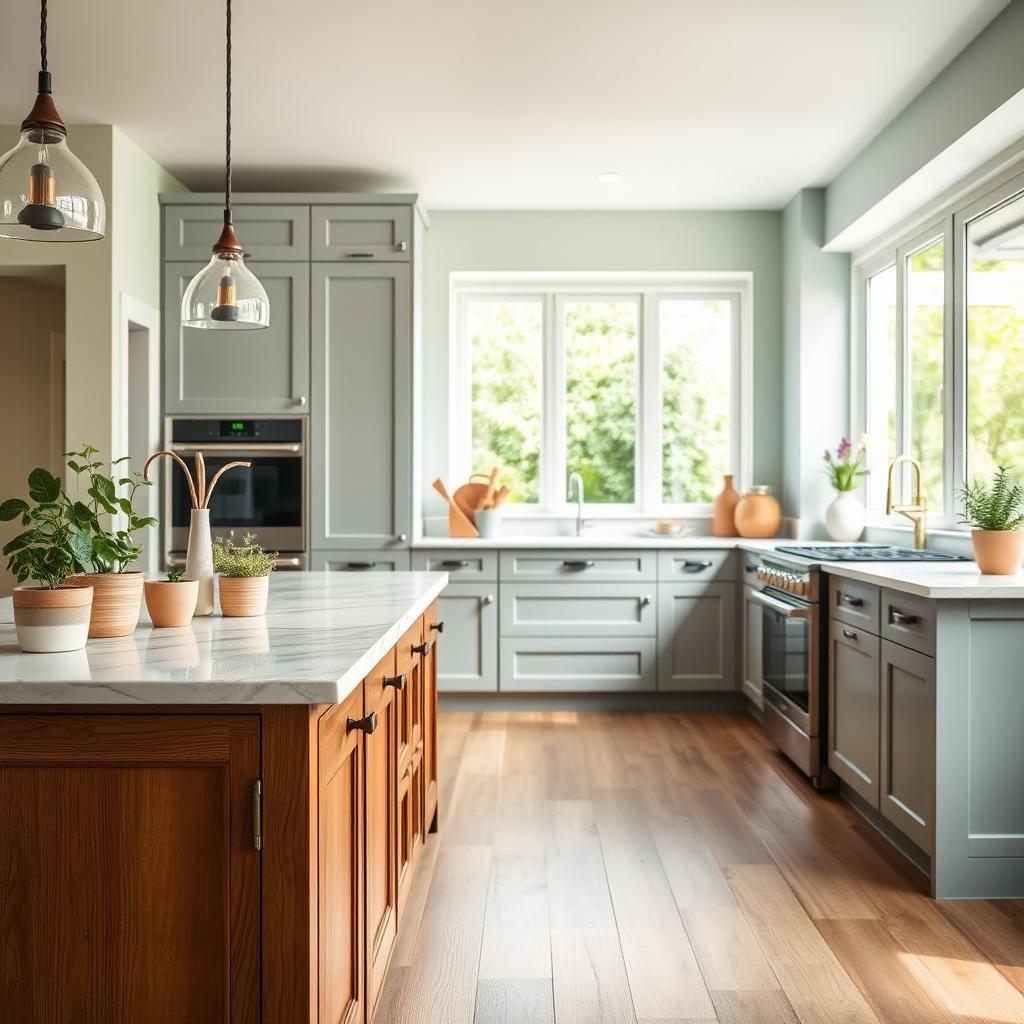
I still remember the first time we painted our cabinets and watched the room change. That moment made me realize how much a finish affects both the design and the air we breathe.
In this guide, we promise practical help. We show how to pick coatings that protect indoor air quality while giving a hard-wearing surface that stands up to daily life at home.
Cabinet coatings once relied on solvent and oil formulas that offgassed for years. Today, water-based alkyds, acrylic lacquers like Ecolacq, and natural options offer better performance with fewer emissions.
We translate technical claims into plain choices: what labels mean, how primers and topcoats work together, and when to hire a pro for spraying a flawless finish. Explore our modern design hub for inspiration and planning at modern kitchen design.
Key Takeaways
- Durability matters: select systems that resist moisture, grease, and frequent cleaning.
- Choose water-based alkyds or acrylic lacquers for lower emissions and oil-like performance.
- Pair primers and topcoats so the layers form one durable film.
- Prep mixed wood and block tannins with shellac when needed.
- Know when to DIY and when to hire a pro sprayer for a seamless finish.
Why low-VOC paints matter for your kitchen today
In busy homes, the finishes we choose shape both looks and the air we breathe. Cooking, steam, and frequent use speed the emission of volatile compounds into indoor air. That makes selection more than a style choice—it is a health and performance decision.
Indoor air quality matters because families spend hours near counters and cabinets. Emissions are highest in the first days and can persist for years depending on cure time and chemistry. Colorants and thick coats can raise solvent levels even when a base is labeled zero.
Indoor air quality and everyday use in high-traffic kitchens
We prioritize coatings that resist sticking and handle humidity so doors close cleanly and surfaces stay smooth. Products with fast dry times and strong crosslinking reduce lingering odor and speed return-to-use for the home.
What “VOC,” “low VOC,” and “zero VOC” mean in the current market
“VOC” refers to volatile organic compounds that offgas into indoor air. Claims vary: some zero bases remain low after tinting, while others increase significantly with deep colors. Always check the full spec and tint system before you buy a voc paint.
- Performance note: PPG BREAK-THROUGH! offers fast dry, excellent flow, and durable early block resistance—useful on laminate and tile.
- Match product choice to traffic, ventilation, and long-term air quality goals.
- For design and product guidance, visit our modern planning hub at eco-friendly half-bath design ideas.
low VOC paints kitchen: how to evaluate products before you buy
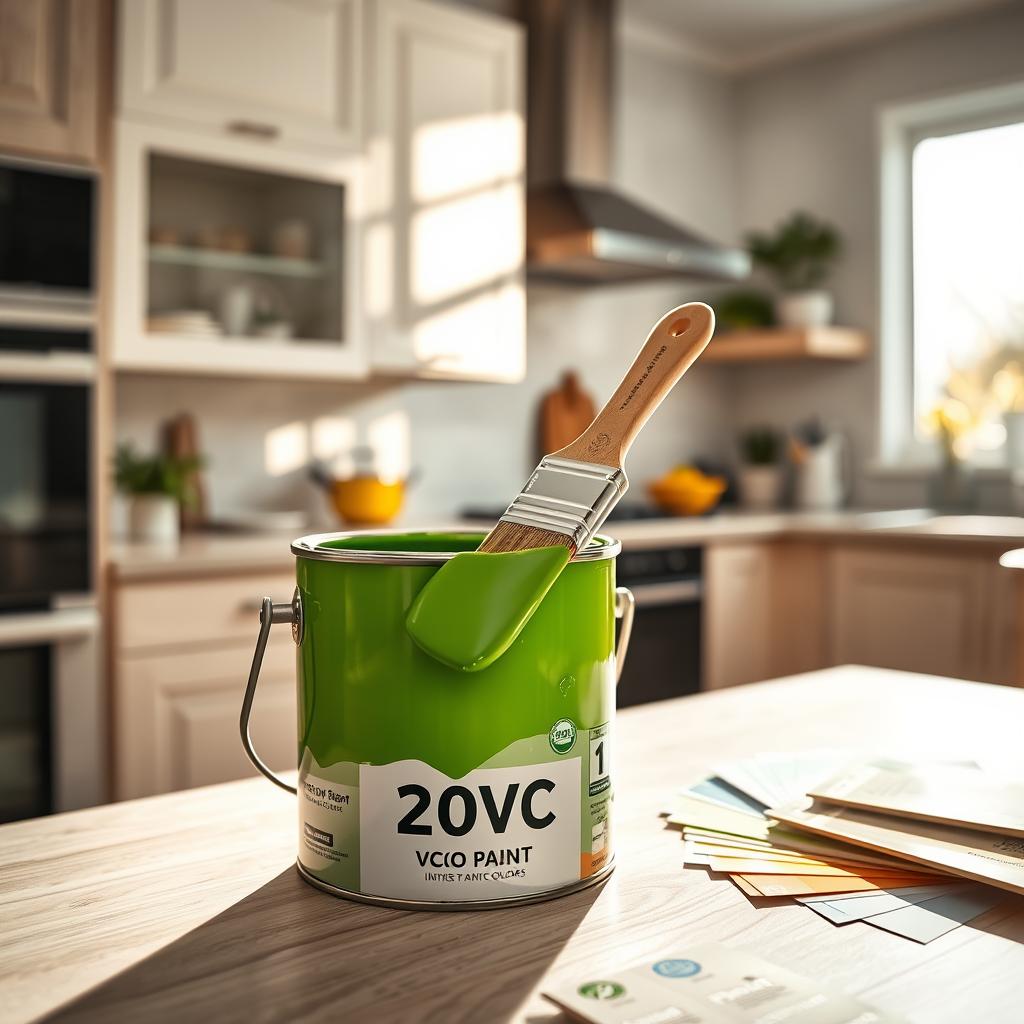
Start with facts: data sheets tell you more than glossy marketing about a product’s real-world behavior.
Reading labels: VOC content, emissions claims, and zero-VOC colorants
Check the technical label and the data sheet first. Look for listed VOC content and ask whether tints use zero voc colorants or conventional colorants that raise levels.
Request emissions testing or an MSDS so you can compare products on an even basis. PPG warns that added colorant can significantly increase voc paint numbers for deep tones.
Durability needs: gloss, matte, and wipeability
Match sheen to use: matte hides flaws but shows stains; gloss cleans easily and resists abrasion on cabinet faces.
Primers, sealers, and topcoats
Evaluate systems, not single items. Shellac blocks tannins on mixed materials and a dedicated primer—such as the one paired with Ecolacq—improves adhesion for sprayed lacquers.
Topcoats range from wax and acrylic lacquers to urethane-modified finishes; choose based on expected wear and cleaning habits.
Colorants can change VOC levels
Ask the store about tint systems. Opt for zero voc paint colorants when available so you don’t sacrifice indoor air quality for a saturated hue.
- Pro tip: prioritize cabinet-rated products with published scrub and hardness metrics.
- Explore specifications and brand guidance at our kitchen page: kitchen specification tips.
Top low- and zero-VOC paint and finish options for cabinets and walls
We favor systems that deliver furniture-grade results while minimizing household emissions. Below are practical options we recommend for cabinet and wall work, with notes on durability, sheen, and suitability for common materials.
Acrylic lacquer for cabinets
Ecolacq primer + lacquer is built for spraying. The matched primer and lacquer form a single cohesive film that levels to a furniture-grade finish. For painted cabinet doors and drawer fronts, this combo gives crisp edges and consistent sheen across profiles.
Water-based alkyds and acrylic enamels
PPG BREAK-THROUGH! is a fast-dry, hard acrylic enamel with excellent flow, early block resistance, and strong adhesion to tricky substrates like laminate and tile. It shortens project schedules and holds up in high-use areas.
Zero-VOC cabinet lines
Healthier Homes offers zero voc paint and lacquer lines that omit formaldehyde, biocides, and heavy metals. Their crosslinking formulas help seal emissions from underlying materials and they color match with zero VOC colorants. Choose matte (5–8) for subtle texture or gloss (70+) for easy wiping.
Natural alternatives
Milk Paint is 100% natural and essentially odorless but needs a durable topcoat—wax for repairability or tung oil for deeper color and toughness. Solvent-free linseed oil paints from Earth and Flax or Allbäck give a hand-rubbed depth and long-lasting oil film.
Brand and product selection at-a-glance
- Ecolacq — best for pro spray shops and the flattest, most even film.
- PPG BREAK-THROUGH! — best for speed, adhesion, and tough substrates.
- Healthier Homes — best for the cleanest chemistry and zero voc paint color matching.
- Milk Paint / Linseed oils — best for natural finish and tactile character.
For curated brand picks and the latest recommendations, view our collection at our curated product guide.
Application best practices for long-lasting, low-emission results
How you apply product often matters more than the brand you choose. Spraying typically gives the smoothest cabinet faces because atomized films level quickly. If you brush, pick a product with strong flow and level and lay down thin coats to avoid lap marks.
Spraying vs. brushing: flow, leveling, and avoiding brush strokes
Wipe-on techniques work well for edges and rails to reduce brush loading. Light sanding between coats maintains a consistent level and helps each layer bond for a tougher finish over the years.
- Prep first: clean, degloss, and scuff-sand all material surfaces; spot-prime knots or stains and use shellac to block tannins on mixed woods.
- For ultra-smooth faces, spray Ecolacq over its matched primer; for brushing or rolling, a cabinet-rated acrylic like PPG BREAK-THROUGH! speeds cure and reduces early block so you can return the cabinet to use sooner.
- Control temperature and airflow to aid cure, limit emissions into indoor air, and keep dust off fresh film.
For step-by-step finish planning or pro application support, see our cabinet pros at cabinet painters in Redmond.
Conclusion
Conclusion
A well-specified finish protects surfaces and improves indoor air quality from day one. We want your home to look great and breathe easier for years.
Choose a product system that fits use: Healthier Homes’ zero voc line offers crosslinking that seals offgassing, Ecolacq delivers a pro-sprayed cabinet finish, and PPG BREAK-THROUGH! gives fast dry and strong adhesion. For natural alternatives, Milk Paint and solvent-free linseed oil bring tactile appeal when paired with a durable topcoat.
Confirm tint systems so your chosen color does not raise voc paint levels. Small checks keep air and view true to your plan.
Use this article as a roadmap, and when you’re ready to specify materials and sheens, visit our kitchen hub to connect with our team: start your project. For more on why cleaner coatings matter, see reasons to use low-VOC paints.


