

I still remember the day I swapped our old refrigerator and felt an immediate relief — lower bills and noticeably fresher air. We write from that place of experience: small choices in products can pay back in comfort and savings.
Today, ENERGY STAR-rated models help homeowners cut utility costs and shrink emissions. In 2025, refrigerators that meet the label use up to 15% less energy, and replacing an old unit can save over $100 yearly. Proper recycling and a new model can save more than $160 and prevent about 4,000 lbs of carbon over its lifetime.
We also highlight cooktops and ovens that run cooler and cleaner. Induction cooktops cook faster, waste less heat, and improve indoor air quality compared with gas. Dishwashers now clean with as little as three gallons of water while keeping performance high.
We’ll show you how to read labels, compare total cost of ownership, and link design with performance. For full remodel advice that blends layout and selection, visit our main Kitchen page: https://zovehomes.com/kitchen/
Key Takeaways
- Save money by choosing certified models that cut yearly running costs.
- Replacing an old refrigerator can reduce bills and carbon emissions significantly.
- Induction cooktops speed cooking and lower indoor pollutant exposure.
- Look at lifetime cost, not just purchase price, when selecting an appliance.
- Design and proper installation keep products performing at peak levels.
Why Energy Efficiency Matters in the Kitchen Today
The modern kitchen now rivals HVAC systems for long-term home energy use, so targeted upgrades pay off fast.
Daily use means cooking, cooling, and cleaning add up. Swapping old gear can cut utility bills and shrink your home’s carbon footprint over time.
Health is part of the case for change. Moving from gas to induction and electric units improves indoor air by reducing combustion pollutants that affect children and seniors.
Water savings matter too: heating less water and using fewer heated rinse cycles lowers both consumption and running costs.
- High impact: Upgrades often yield the best returns in day-to-day use.
- Compound gains: Pairing a new refrigerator with a better dishwasher and induction range boosts savings year-round.
- Plan ahead: We guide priorities whether you replace one item or remodel the whole space.
For curated solutions and step-by-step planning, see our full guide on best practices for energy-efficient kitchens and visit our main Kitchen page for design-focused options.
How to Read ENERGY STAR and EnergyGuide Labels
When we shop for a new model, labels give a reliable snapshot of real-world performance.
ENERGY STAR is run by the EPA and DOE and flags products that meet strict standards for energy use and performance. Many ENERGY STAR refrigerators now use up to 15% less energy than standard designs.
What the ENERGY STAR label guarantees
The mark means third‑party testing and ongoing verification back up efficiency claims. Use it as a first filter when narrowing choices.
EnergyGuide: annual estimates you can trust
Look for the EnergyGuide number in kWh. It estimates annual energy consumption and typical utility costs so you can compare models side‑by‑side.
Beyond the label: tech and smart features
Modern technology like inverter compressors and induction elements helps products run steadier and use less during daily operation.
- Soil sensors adjust dishwasher cycles to save water and power.
- Smart scheduling shifts cycles to off‑peak hours where rates are lower.
- Compare metrics—kWh and gallons—for a clear apples‑to‑apples view.
Combine label data with notes on durability and service to build a shortlist of models that use less while meeting your cooking and cleaning needs. For curated picks and design guidance, return to our main page: zovehomes kitchen.
Energy Efficient Refrigerators: Features, Models, and Savings
Choosing the right fridge blends practical savings with thoughtful design choices. We focus on the features that lower running costs while fitting your layout and style.
Core tech that matters: Inverter compressors run at variable speeds to keep temperatures steady and use less energy. Improved cabinet insulation reduces heat gain and limits compressor cycles. Together these changes cut annual energy consumption by noticeable amounts.
Format and model choices
French‑door and bottom‑freezer models often strike a good balance of access and temperature control. They work well in modern layouts and usually maintain food visibility with less cold air loss.
Life‑cycle savings and carbon footprint
ENERGY STAR‑certified refrigerators can use up to 15% less energy than conventional models. Replacing a pre‑2000 unit can save $100+ per year; full replacement and recycling often save over $160 and avoid roughly 4,000 lbs of CO2 over the appliance’s lifetime.
- Compare kWh on EnergyGuide labels across similar‑capacity models.
- Check seals and temperature controls for long‑term performance.
- Position wisely: avoid direct sunlight and proximity to heat sources to reduce heat load.
To match performance with your design, we can help you pick models that fit dimensions and style while delivering measurable savings. Explore tailored refrigerator recommendations and styling tips on our guide to kitchen decor ideas and visit our main planning page at https://zovehomes.com/kitchen/.
Energy-Efficient Dishwashers: Less Water, Less Power, Better Cleaning
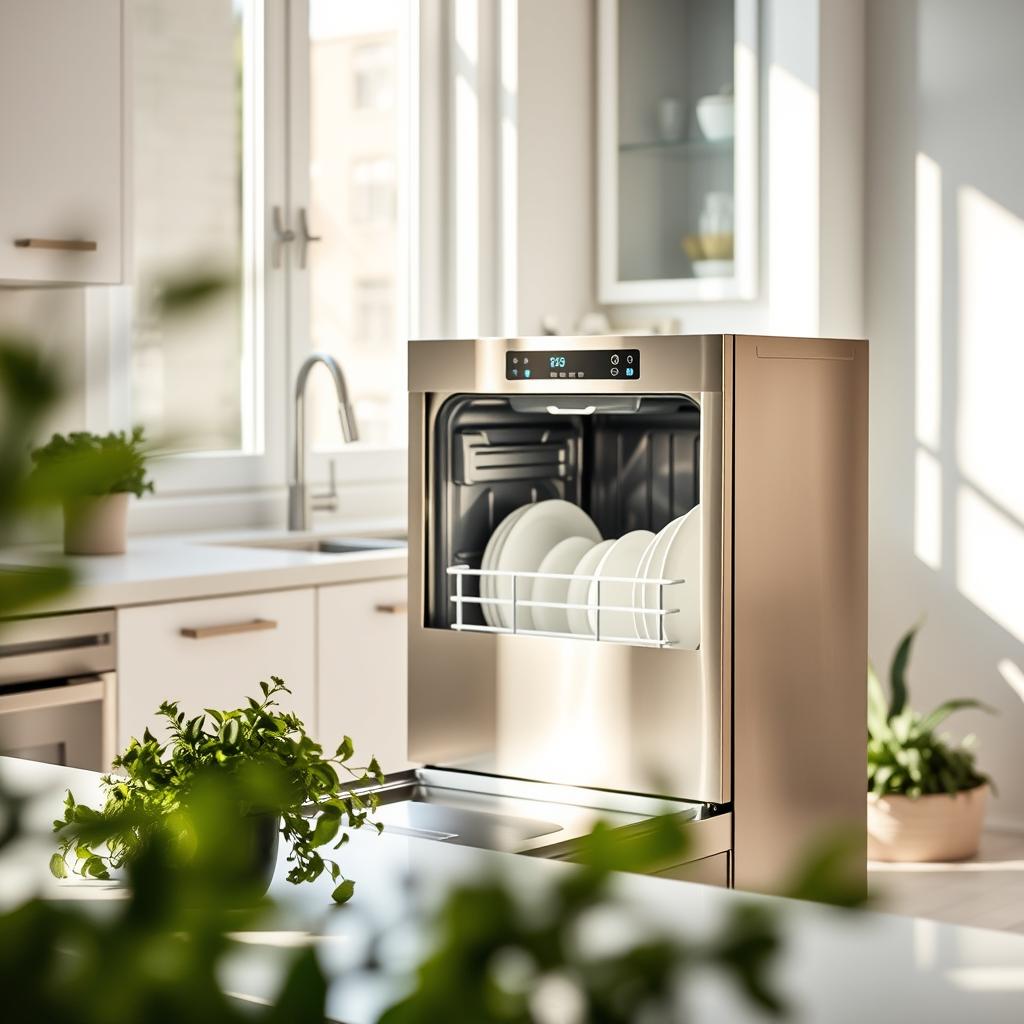
Today’s dishwasher designs pair smart sensors with low‑water cycles to cut both use and run costs. We favor machines that balance strong cleaning with low consumption and quiet operation.
Soil sensors, eco cycles, and smart drying
Soil sensors adjust cycle length and spray intensity to match the load. That reduces wasted water and prevents repeat washes.
Eco cycles and cooler temps maintain cleaning performance while using less power. For drying, choose condensation or air options to avoid heat elements when possible.
Three gallons per cycle: real savings
ENERGY STAR dishwashers can clean using about three gallons water per cycle. Older machines often use more than ten gallons, so modern models slash both water and the energy needed to heat it.
Heat pump drying and selection tips
Heat pump drying can cut total electricity use by up to 24% on premium units. When shopping, we recommend:
- Prioritize ENERGY STAR models with soil sensors to tailor cycles and trim consumption.
- Check spec sheets for gallons per cycle and EnergyGuide estimates before comparing models.
- Pick condensation or heat pump drying if drying performance matters without using lots of extra power.
Keep filters clean and load smartly to sustain performance. For curated brand and model picks that fit design and budget, visit our kitchen planning page at https://zovehomes.com/kitchen/.
Cooking Smarter: Induction Cooktops and Efficient Convection Ovens
Switching cooktops and ovens can change how fast meals come together and how your home feels. We focus on tools that speed prep, cut heat loss, and improve indoor air during daily cooking.
Induction vs gas and traditional electric
Induction transfers energy directly to cookware, reaching about 84% efficiency versus roughly 74% for conventional electric and 40% for gas. That means faster boils, tighter temperature control, and less wasted heat in the room.
Faster times, precise control, and healthier indoor air
Induction lowers ambient heat and avoids combustion byproducts. That improves indoor air by reducing nitrogen dioxide and carbon monoxide exposure while giving precise control for delicate food tasks.
Convection ovens: even results at lower temps
Convection uses circulated air to brown and cook faster. You can often lower temps or time and still get consistent texture, which translates to using less energy overall.
Selecting models that balance savings and performance
- Check cookware compatibility for induction and look for bridge zones for large pans.
- Prioritize ovens with true convection, fast preheat, and reliable temperature calibration.
- Choose models that pair well in open-plan homes to reduce heat buildup and ease cooling loads.
If you’re remodeling a new cook zone, we’ll help you pick the right blend of technology and design. Explore options and model guidance at https://zovehomes.com/kitchen/.
Small & Countertop Appliances That Use Less Energy
For quick meals and small portions, countertop units can be smarter choices than firing up a full oven. We recommend swapping when a single rack or a short cook time will do.
Microwaves, kettles, slow cookers, and air fryers for daily efficiency
Microwaves excel for reheats and small portions. They avoid long preheat cycles and often finish in minutes.
Electric kettles bring water to boil faster than a stovetop for tea or quick prep. Slow cookers and multi‑cookers use low wattage for long, steady cooks—great for batch meals.
Air fryers mimic convection in a small chamber. That reduces cook time and usually uses less power than a full oven.
When to swap oven use to save time and power
- Choose countertop models for single racks, small portions, or rapid reheats.
- Use smart plugs to cut phantom draw and schedule shutoffs for idle units.
- Check model specs for true wattage, insulated walls, and tight seals to balance speed and results.
- When remodeling, plan outlets and storage so these tools stay handy and get used daily. We can integrate this into your new plan at https://zovehomes.com/kitchen/.
Ventilation, Indoor Air, and an Energy-Efficient Kitchen
A well‑designed hood can be the difference between stale air and a comfortable, safe cook space. We look at how ventilation choices affect comfort, safety, and long‑term energy outcomes.
Why switching from gas improves indoor air quality: Moving to induction or sealed electric ranges removes combustion pollutants at the source. That change lowers indoor nitrogen dioxide and carbon monoxide, improving health for children and adults alike.
Smart, sensor-driven hoods that protect air and save power
Modern hood systems use sensors to modulate fan speed. Leading models can cut fan power by 66–78% and save about 30–40% of conditioned air loss by running only when needed.
Air quality monitoring: CO2, VOCs, and particulate tracking
Integrate CO2, VOC, and PM sensors to trigger ventilation automatically. Smart setups can lower total exhaust while keeping indoor pollutant levels safe—studies show overall exhaust drops of roughly 64% without hurting performance.
- Prioritize capture efficiency over raw CFM so lower speeds still remove contaminants.
- Plan duct runs with smooth bends and minimal elbows to keep performance at modest fan speeds.
- Use backdraft dampers and make‑up air where needed to balance pressure and comfort in tight homes.
- Match hood width and depth to your cooktop; modest oversizing improves capture and cuts noise.
When you remodel, we’ll place and size ventilation and ducting to protect indoor air and comfort while limiting wasted energy. Plan hood placement early at https://zovehomes.com/kitchen/.
Smart Features and Energy Monitoring for Modern Kitchens
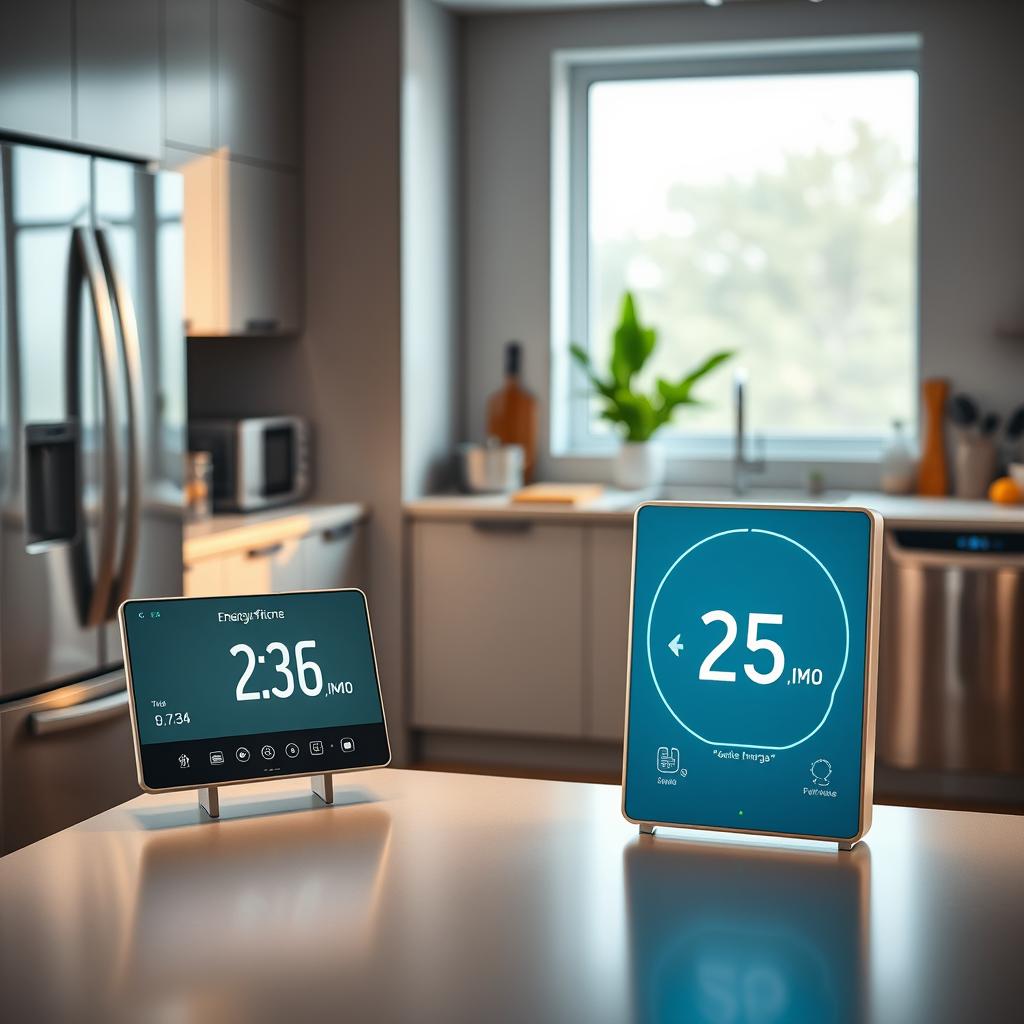
Modern monitoring gives a clear view of which models use the most power and where to cut waste. Many new units allow smartphone control, usage analytics, and maintenance alerts that help save money and time.
Off‑peak scheduling moves heavy loads like dishwashers and laundry to cheaper hours and cleaner grid periods. Usage reports show which models drive the most consumption so you can target upgrades or change habits.
Off-peak scheduling, analytics, and alerts
Usage analytics reveal trends in power and water consumption. Maintenance alerts—filter changes, coil cleaning, and software updates—keep systems running well and avoid hidden penalties.
Smart plugs to curb phantom load
Smart plugs can shut off standby draw on countertop gear and secondary fridges. They’re an inexpensive way to cut phantom loads without changing daily routines.
Home automation integrations
Integrate devices with Google Assistant or Amazon Alexa for scene‑based savings. Lights dim, ventilation adjusts, and ovens preheat just‑in‑time to reduce overall consumption.
- Opt for models with off‑peak scheduling and clear usage data.
- Use smart plugs to remove phantom draw from idle devices.
- Create dashboards to track power and water trends and celebrate wins as a family.
We design control layouts that remain simple and reliable. Contact us to spec compatible models and integrate controls into your remodel: https://zovehomes.com/kitchen/.
Layout, Installation, and Maintenance to Maximize Efficiency
Small clearance changes during design can cut runtime and raise overall performance. Thoughtful placement reduces heat gain, improves airflow, and keeps long‑term operating costs down.
Appliance placement: reducing heat buildup and avoiding direct sunlight
Place refrigerators away from ovens and windows to minimize heat load. That reduces compressor runtime and extends component life.
Leave clearance around refrigeration units so coils can breathe. Tight alcoves and blocked vents raise heat loss and degrade performance.
Professional setup: ventilation clearances, hood height, and airflow spacing
Mount range hoods about 30–36 inches above the cooktop and extend the capture area roughly 6 inches beyond the cooktop edges. This lets the hood run at lower fan speeds while still removing cooking fumes and excess heat.
Seal ductwork, reduce bends, and use smooth rigid ducts to keep airflow high with less fan power. Also specify correct circuits and amperage so each appliance operates without nuisance trips.
Routine care to sustain performance and prevent energy loss
Schedule simple maintenance: clean condenser coils, replace filters, descale kettles, and run dishwasher maintenance cycles. These tasks keep models working as designed.
Upgrade door gaskets, adjust hinges, and recalibrate oven temperatures periodically. We coordinate these details during design so your home runs well from day one and stays that way.
- Place fridges away from heat sources and windows.
- Mount hoods 30–36″ above cooktops; oversize capture by ~6″.
- Ensure refrigeration clearance and service access.
- Specify proper electrical circuits and amperage.
- Seal ducts, minimize bends, and use smooth rigid ducting.
- Keep a routine maintenance schedule for filters, coils, and gaskets.
During design we plan placement, electrical, and ventilation details so the space performs from move‑in day. For lumen planning and related layout guidance, see our lighting guide: how many lumens does your kitchen. For full design coordination, visit our remodel page: https://zovehomes.com/kitchen/.
Costs, Rebates, and ROI for Energy-Efficient Kitchen Appliances
https://www.youtube.com/watch?v=sm4sa_PYFe4
Upfront costs can feel steep, but smart incentives and lifetime savings change the math quickly.
Upfront price vs long-term utility savings. U.S. households that switch to high‑performance models can save roughly $300–$500 a year on utility bills. An ENERGY STAR refrigerator typically uses 300–500 kWh annually versus 1,539 kWh for a pre‑1993 unit.
Finding credits, state programs, and rebates. Federal tax credits may reach $1,200 for ENERGY STAR items and up to $2,000 for certain high‑performance equipment. Local utilities often add $25–$100 per product. We help you stack these offers so you keep more money at purchase.
Calculating ROI over an appliance’s lifespan
Use this practical formula: (Net Savings + Increase in Home Value – Initial Cost) / Initial Cost × 100. Include lower consumption, maintenance savings, and any increase in resale value.
- Replacing an aging refrigerator can cut hundreds of kWh and lower utility bills fast.
- Modern dishwashers can save about 3,870 gallons water over their life while reducing the power to heat water.
- We model scenarios (good, better, best) and prepare documentation for rebates so claims go smoothly.
Want a custom ROI estimate? Contact us and we’ll run numbers for your home and the specific models you’re considering: https://zovehomes.com/kitchen/.
Energy efficient kitchen appliances: How to upgrade today
Begin upgrades by looking for the oldest, hardest‑working units in your home — they usually offer the biggest gains.
Many utilities run pickup and certified recycling for old units. That helps avoid landfills and recovers valuable materials. Replacing a 10+ year‑old refrigerator with a certified model can save over $100 per year and improve comfort right away.
Recycle and replace: safe disposal of old appliances and quick wins
Start with the biggest wins: swap the oldest fridge first, then move to dishwashers and ranges as budget allows.
- Arrange utility pickup or certified recycling so disposal is safe and you unlock full environmental benefits.
- Add smart plugs to cut phantom draw from idle countertop devices and adjust dishwasher cycles to eco modes to save energy now.
- Choose models with maintenance alerts to sustain performance without extra effort.
- Use stop‑gap care: update door seals, clean coils, and recalibrate ovens until full replacements fit your timeline.
For a streamlined upgrade path — selection, rebates, and installation — schedule your project with us today: start planning your remodel. We’ll align choices with your design, budget, and target payback so your energy-efficient kitchen comes together smoothly.
kitchen decor ideas can help match new units to your style while keeping performance front of mind. Expect quick comfort gains: quieter operation, cooler cooking, and better indoor air from day one.
Conclusion
The quickest route to a calmer, more capable cook space pairs the right gear with correct installation. Choose induction for fast, about 84% efficiency, opt for dishwashers that use roughly three gallons per cycle, and pick refrigerators that run near 300–500 kWh a year.
Match models by labels and measured metrics, size hoods and clearances during design, and add smart controls for off‑peak scheduling and alerts. Smart ventilation can cut fan power by up to 78% while keeping air safe.
We’ll help you prioritize upgrades with the best payback for your home. When you’re ready to move from research to results, start your plan with us at our main Kitchen page and learn related lighting tips in our bathroom lighting guide.


