

How much smarter can a room get before it stops feeling like home? I ask this because modern cooking spaces are already shifting from isolated appliances to unified systems that help with timing, safety, and food care.
We see AI-driven assistants that suggest recipes and manage inventory, induction hobs that offer precise heat and higher efficiency, and smart refrigeration with internal cameras for remote checks.
Design and practical engineering now work together to make kitchens more usable for busy households. I focus on meaningful innovations over gimmicks — features that reduce waste, extend appliance life, and improve air quality through sensor-driven hoods and UV purification.
For a deeper look at styling and functional layouts, explore our main guide at Zove Homes — Kitchen and related ideas at kitchen decor ideas. In the sections that follow, we’ll set performance benchmarks and show what really matters for life at home.
Key Takeaways
- Smart systems are making kitchens unified hubs for cooking, scheduling, and energy management.
- Efficiency gains come from induction, automation, and smarter ventilation.
- Meaningful innovations reduce waste and extend appliance lifespan through remote diagnostics.
- Good design and tech combine to support workflow and multi-user homes.
- Air quality, hygiene, and precise temperature control are new performance baselines.
Why the next-gen kitchen matters: from convenience to real-world impact
Smart appliances matter when they simplify routines and cut real costs for homeowners. We focus on features that deliver measurable benefits: less food waste, reliable operation, and real time energy insights.
What U.S. homeowners want is practical. They want better cooking outcomes, fewer duplicate grocery trips, and appliances that alert them before a failure. Modular systems that layer onto existing setups protect investments and make phased upgrades realistic.
What U.S. homeowners actually want from kitchen tech
Homeowners value inventory visibility, maintenance alerts, and easy voice or display controls. These features translate into time saved and lower ownership costs.
How design and technology converge in tomorrow’s kitchens
Layouts, lighting, and storage pair with sensors and displays to streamline prep, cooking, cleanup, and hosting.
- Compatibility: Upgradeable systems that avoid vendor lock-in.
- Hygiene & access: Touchless taps and dedicated displays reduce clutter.
- Water & sustainability: Filtration and efficient fixtures support health and long-term goals.
For project-ready ideas and planning help, explore our guide at Zove Homes kitchen and our remodel examples at Kirkland kitchen remodel. We help you map upgrades to comfort, performance, and resale value.
future kitchen technology trends shaping smart appliances and systems
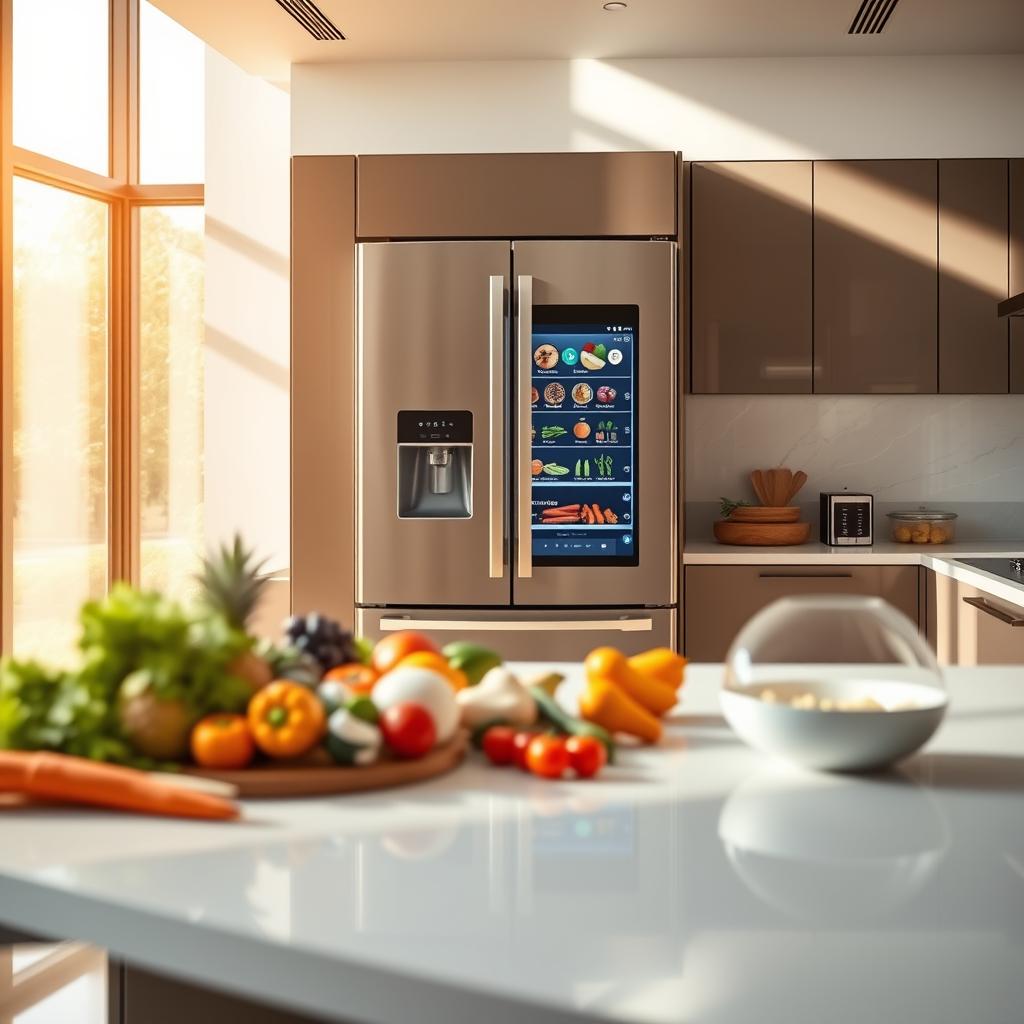
Smart appliances are moving from novelty to everyday helpers that save time and cut waste. I’ll show how practical device features change shopping, cooking, and maintenance so upgrades feel useful, not gimmicky.
Smart refrigerators: inventory tracking and less waste
Smart refrigerators use internal cameras and apps so you can check contents while shopping and avoid duplicate buys. They can auto-generate lists synced to meal plans, which reduces food waste and saves grocery trips.
Intelligent ovens and induction cooktops
Modern ovens support remote preheat, built-in recipes, and voice activation for consistent results. Induction cooktops heat faster, offer precise control, and include auto-shutoff for safer, speedier cooking.
Touchless faucets and smart dishwashers
Motion-sensor faucets improve hygiene and trim water use with preset temps. Smart dishwashers adapt cycles to soil levels, enable remote monitoring, and accept simple voice commands to start or pause cycles.
Smart small appliances and central control
Connected coffee machines, blenders, and toasters learn schedules and adapt to preferences. A central hub or assistants unify control and push remote diagnostics so you catch issues before failures.
- Shopping smarter: linked lists and fridge cameras reduce waste and repeat purchases.
- Safer, faster cooking: ovens and induction deliver precise, reliable results.
- Unified systems: choose platforms that match your preferred assistants for smooth daily control.
When you’re ready to move from ideas to a plan, start your specification and phased upgrades with a detailed plan at our main kitchen page. For practical buying advice, see this roundup of smart upgrades at smart upgrade guide.
Cooking precision, safety, and air quality: the new performance baseline
Exact temperature control and reliable ventilation are becoming the baseline for safe, repeatable cooking. Induction stoves deliver instant changes in heat, cool-to-touch surfaces, and higher efficiency than gas or older electric ranges. That improves safety and makes cleanup easier.
Sous vide and smart thermometers remove guesswork by holding precise temperatures for long cooks. Steam assist in ovens helps breads and roasts achieve consistent crust and moisture without manual interventions.
Air quality matters as much as heat management. Sensor-driven hoods adjust extraction when smoke or steam rises. UV purification tackles odors and microbes, while heat recovery ventilation brings fresh air back without wasting warmth.
- Induction benefits: fast response, cooler surfaces, finer temperature control for delicate sauces and sears.
- Precision tools: sous vide, wireless thermometers, and steam assist stabilize temperatures across meals.
- Right-sized ventilation: quiet, efficient systems encourage regular use and prolong finishes and devices.
We recommend pairing induction with magnetic cookware and sizing vents to the room so you get repeatable results and a safer, cleaner home workspace.
Interfaces of the future: voice, displays, and augmented reality
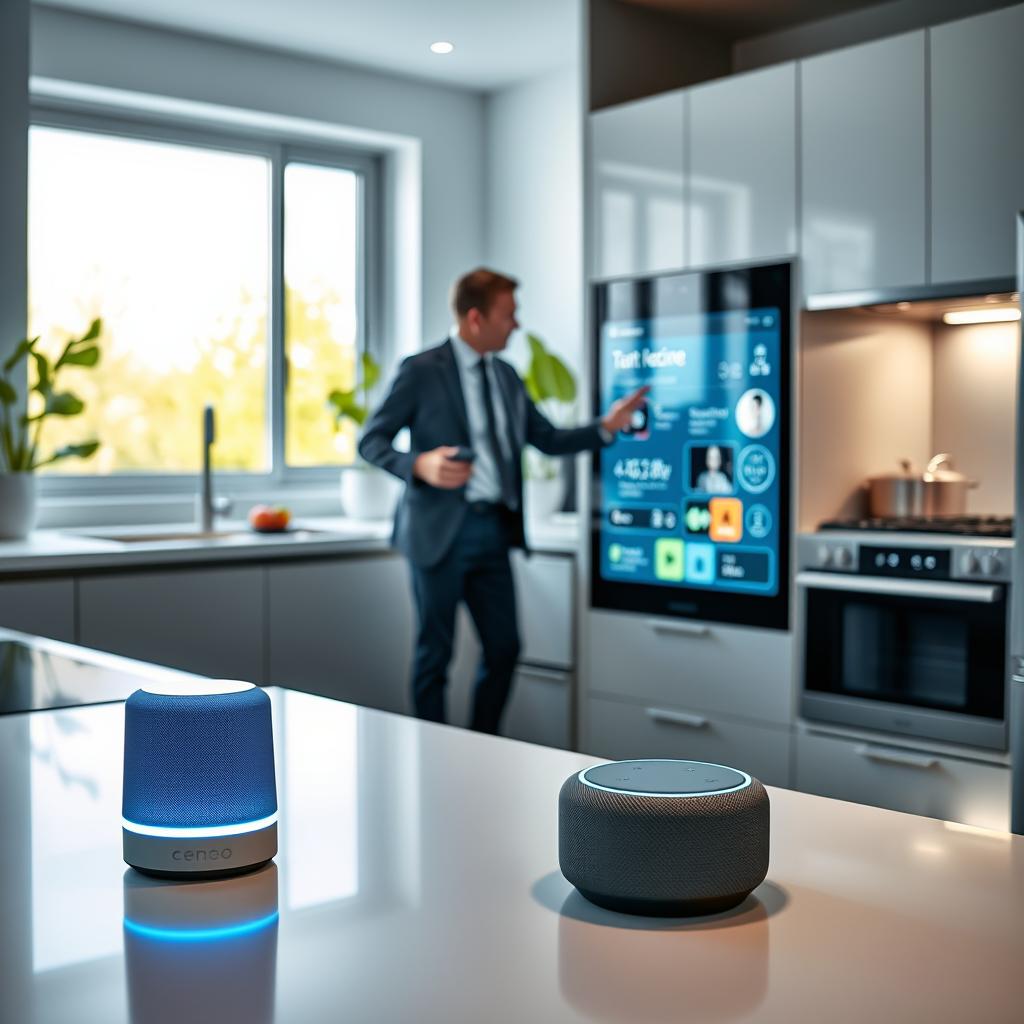
Modern interfaces put clear guidance and hands-free control where you need them most. We focus on practical ways to add spoken control, splashproof displays, and projection without disrupting workflow.
Voice control in the kitchen: hands-free timers, temperature adjustments, and recipe support
Voice assistants streamline common functions—timers, quick conversions, and temperature tweaks—so you stay hands-free during prep. Use voice commands to nudge ovens, set timers, or ask for a recipe step without touching a screen.
Kitchen display systems: centralized calendars, protected recipe screens, and projection
We recommend dedicated displays or protected mounts for recipes and calendars. Splash-friendly displays keep phones safe and present a consistent hub for lighting, music, and appliance control.
Projection systems can place instructions on counters or backsplashes, making steps easy to follow at eye level.
Augmented reality for cooking guidance and design visualization
AR overlays step-by-step cooking guides and previews appliance and cabinet footprints in your actual layout. That helps you validate design choices before buying and ensures new systems fit the room.
- Integration: link displays to ovens, lighting scenes, and routines that match your schedule.
- Durability: choose devices built for humidity and splatter with louder speakers and responsive mics.
- Coffee and small appliances: voice-enabled brewers can preheat and schedule brews from your main display.
For renovation inspiration and real examples of integrated interfaces, see our gallery of remodeled spaces at renovated kitchens.
Sustainability, storage automation, and resource efficiency
A focused plan for water, energy, and storage delivers measurable sustainability gains. Built-in filtration removes chlorine and heavy metals so drinking water tastes better and cuts bottle use. Touchless taps with preset temperatures save water and improve hygiene.
Water technology: filtration, temperature-on-demand, and touchless control
We recommend whole-room water strategies: high-grade filters, instant hot and sparkling dispensers, and temperature-on-demand taps. These options reduce single-use bottles and speed tasks like filling kettles or a single-use coffee cup.
Energy optimization: monitoring consumption, solar integration, and smart scheduling
Energy monitoring reveals where appliances draw most power. Smart scheduling shifts heavy draws to off-peak hours and pairs well with solar-ready circuits and simple battery or recovery systems.
Smart trash and automated storage
Smart trash cans automate lids and help sort recycling and compost to cut household waste. Motorized cabinets, rotating shelves, and climate zones extend produce and wine life.
- Automated storage: smart containers track quantities and freshness.
- Materials: choose bamboo or recycled-content cabinets for durability and modular upgrades.
- Space saving: vertical lifts and rotating corners reclaim room without sacrificing access.
For phased plans, budget ranges, and tailored options, start your brief with us and we’ll map upgrades that lower consumption, reduce waste, and make daily cooking simpler.
Conclusion
The best upgrades focus on outcomes—reliable appliances, stable temperatures, and lower running costs.
We summarize the arc from smart refrigerators and precision ovens to air-quality systems and automated storage. The next wave emphasizes performance, safety, and sustainability.
Choose devices for compatibility, remote diagnostics, and clear upgrade paths so your investment stays relevant. That approach raises your success with recipes, saves time, and cuts food waste.
Precision matters: stable temperature control, better ventilation, and targeted water use translate into more consistent cooking and healthier air at home.
Start small: pick one or two high‑impact changes, then layer systems that fit your habits. Ready to move from ideas to specifications? Explore options and timelines with our team at zovehomes.com/kitchen/.


