
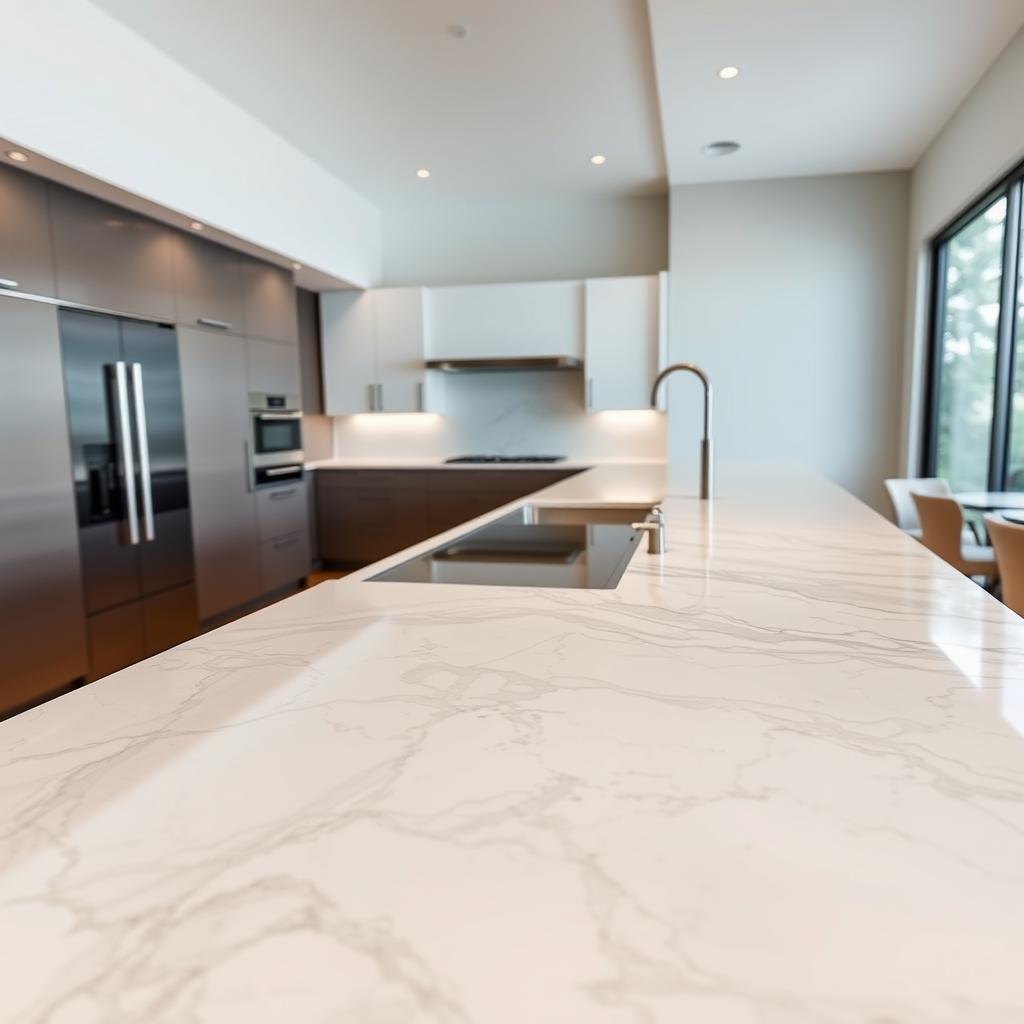
I still remember the first time I walked into a home with a continuous stone drop on the island. The room felt calmer and more deliberate. That moment made me see how a single design choice can change the mood of a home.
We guide you through what a waterfall kitchen island countertop is, why it creates a bold, sculptural look, and how it fits modern design goals. This introduction sketches costs, common materials, and practical trade-offs so you can decide if this style suits daily life.
Quartz often leads for low maintenance and seamless veins, while marble or granite gives dramatic character when matched carefully. Average slab prices run roughly $40–$100+ per square foot, and precise mitered fabrication can add $1,000–$2,000. We explain where this edge excels and where it can feel too heavy, and we point you to visuals and next steps at our kitchen portfolio. For related surface options, see laminate alternatives.
Key Takeaways
- Bold focal point: continuous vertical slabs deliver a sculptural look.
- Quartz offers low upkeep and consistent veining.
- Budget factors: slab price plus advanced fabrication add most cost.
- Best for open, modern layouts; less ideal in very small or traditional spaces.
- We provide planning guidance and real examples at our portfolio link above.
What Is a Waterfall Countertop and Why It’s Trending in Modern Kitchen Design
A seamless side wrap gives modern islands an architectural weight that reads as intentional and refined.
We define this design as a surface that continues down one or more sides to the floor, creating a cohesive frame for the island. Unlike standard tops that end at a cabinet edge, this approach creates visual mass and a sculptural profile.
Why it’s trending: clean lines, a gallery-like presence, and the ability to make an open-plan room feel curated. Designers favor the look because it elevates contemporary kitchen design while keeping finishes simple and bold.
The trade-offs are practical: these wraps need precise fabrication, and the added vertical surface brings visual weight that can overwhelm small spaces. Consider one-side versus two-side wraps to balance flow, seating, and appliance access.
For project ideas and layouts that show how this choice works with different materials and elements, explore our inspiration and plans at top countertop trends for 2025 and the Zove Homes kitchen gallery.
- Definition: continuous side panels that wrap to the floor.
- Comparison: more dramatic than standard countertops; needs advanced fabrication.
- Suitability: best for modern, minimal styles and open layouts; weigh personal preferences and space.
Waterfall Kitchen Island Countertop: Core Features, Benefits, and Drawbacks
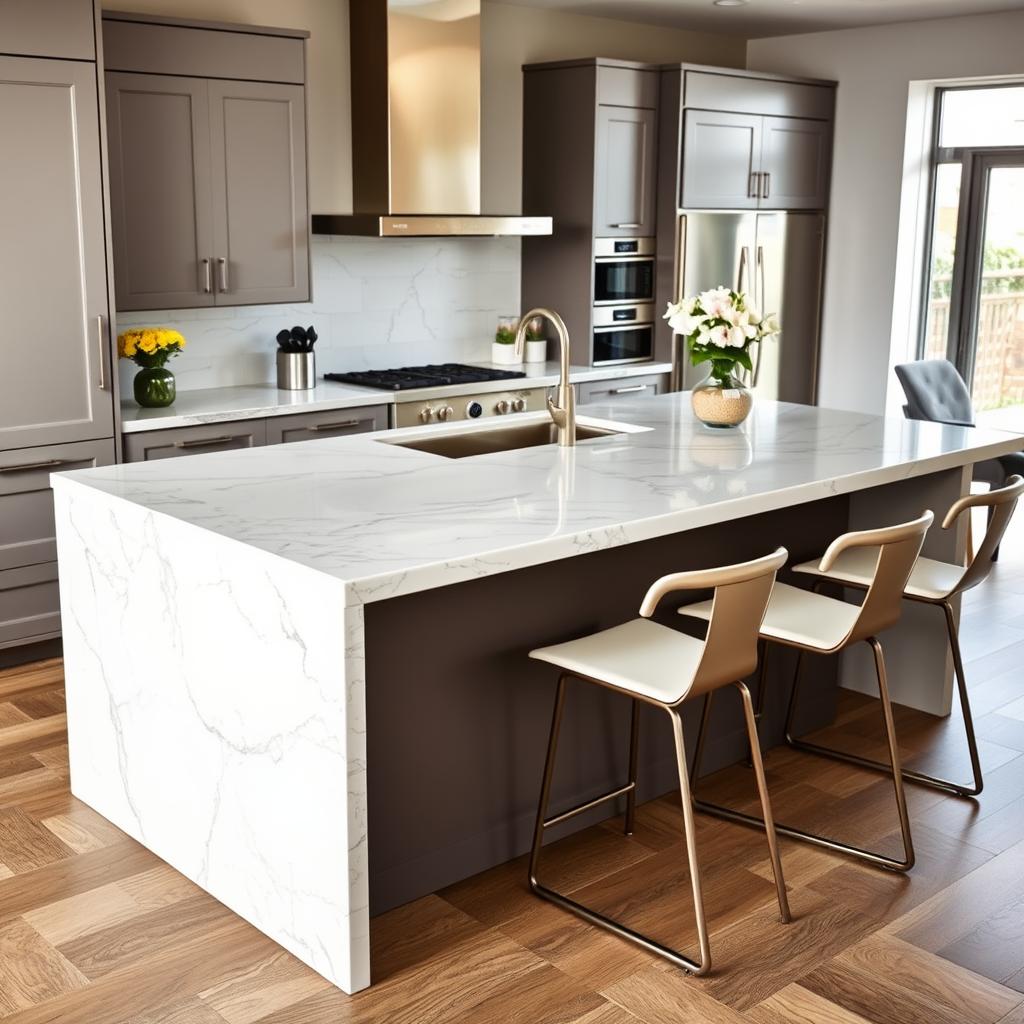
A continuous slab that folds down the sides makes an island feel like a single sculpted piece.
Signature feature: the top pours over vertical planes to create a clean, monolithic look. The waterfall effect depends on precise mitered corners and vein alignment to read as one block. Quartz often gives the most seamless match; natural stone needs careful pattern matching.
Everyday benefits: durable vertical surfaces protect cabinet faces, create a strong focal point for entertaining, and help define prep, cooking, and seating zones so the room feels intentional.
Potential drawbacks: this approach raises material and fabrication costs, adds visual mass, and increases edges to keep clean. Chips or scratches show differently on sides versus tops, so consider material-specific durability and edge details.
Think about clearance and stool placement to avoid bumps. For family homes, choose rounded corners or protective habits. Good lighting—pendants and under-island LEDs—amplifies the appeal without glare.
After weighing features and trade-offs, explore next steps with our team at Zove Homes Kitchen or review material options like granite countertops.
- Design: sculptural, cohesive planes
- Durability: varies by material and finish
- Practical: strong visual appeal but higher cost
Best Materials for Waterfall Countertops: Quartz, Marble, Granite, Porcelain, and Concrete
Material choice defines both the look and long-term care of a wrapped island surface. We compare five leading options so you can match performance to your design goals.
Quartz — Engineered slabs offer controlled or absent veining for easier mitering and near-seamless edges. Quartz is nonporous and resists stains, so it needs no resealing. Designers favor it for consistent patterning and low maintenance.
Marble and granite — Natural stone delivers unique character and movement. Marble shows dramatic veins; granite varies in pattern. Both need advanced planning to align veins across sides and may require periodic sealing.
Porcelain and concrete — Porcelain offers thin, large-format slabs with modern finishes and lower installation ranges. Concrete gives custom color, texture, and cast profiles for an architectural effect. Both give strong design flexibility.
- Edge execution: square or polished edges and precise mitering minimize visible seams.
- Surface sheen: matte versus polished changes reflections and the perceived mass of the sides.
- Selection tip: review large samples under project lighting, photograph slabs for vein-matching, and order extra material for repairs.
Typical slab ranges run roughly $40–$100+ per square foot, with porcelain installation commonly around $10–$40 per square foot. To see completed projects and compare these materials side-by-side, explore our inspiration at Zove Homes Kitchen, and for related surfaces check our bathroom countertops guide.
Cost Breakdown by Material and Square Foot: From Slab to Installation
Before you pick a slab, it pays to map costs from slab price per square foot to on-site installation. We walk through typical ranges so you can set a realistic budget for a wrapped island project.
Typical slab prices per square foot by material
Average slab ranges: quartz ~$40–$100+/square foot; granite ~$15–$140/square foot; marble ~$30–$130/square foot; porcelain ~$55–$120/square foot; concrete ~$50–$100/square foot.
Installation costs and why fabrication adds $1,000–$2,000
Installation commonly runs up to ~$100 per square foot for many stones. Porcelain often installs for ~$10–$40 per square foot. CNC mitered fabrication is a precision step and typically adds $1,000–$2,000.
Budgeting for one-side vs. two- or three-side wrapped designs
- One-side wraps add vertical square footage but limit material waste.
- Two- or three-side designs increase slab needs, labor, and delivery or rigging costs.
- Plan for vein-matching and extra slabs; resealing for natural stone can cost $200–$1,200 per year.
We recommend a line-item proposal that lists slab, fabrication, installation, and contingencies. When you’re ready to price your project precisely, contact us via https://zovehomes.com/kitchen/ for a tailored estimate and timeline.
Design Details That Make the Difference: Edges, Thickness, Overhangs, and Seating
Small details — edges, thickness, and overhang — decide whether a wrapped surface reads as refined or bulky.
Edge profiles: For a true modern look we favor a square edge. It reduces visual noise at the miter and reinforces the continuous plane. Small eased corners add safety for families while keeping the style sharp.
Slab thickness: Match top and side dimensions at roughly 2–3 inches. When the thickness aligns, the planes read as one monolithic volume and veins fall into place more naturally.
Overhangs and seating comfort
Plan overhangs from about 10.5 inches for occasional perching up to 18 inches for daily dining. Larger overhangs need reinforcement or brackets to avoid sag.
Account for knee clearance, footrest height, and circulation behind seating so traffic flows in the space. Test layouts by taping stool widths and heights on-site before final fabrication.
- Protective features: small chamfers or eased edges at corners for family homes.
- Integrations: hide power and USB under the overhang to preserve the continuous look.
- Style tip: wood stools and warm accents soften the modern volume without diluting the design.
We link executed designs and edge options on our Kitchen page so you can compare thickness pairings and seating layouts for your project: https://zovehomes.com/kitchen/.
Fabrication, Installation, and Alignment: How to Achieve a Seamless Waterfall Effect
Precision in fabrication turns bold stone slabs into quiet, cohesive installations. We start with careful templating so measurements are exact and seams fall where they belong.
CNC mitering and dry-fit workflow
Manufacturers use CNC cutters to mill precise mitered edges. This machining creates tight seams and can add up to $2,000 for shop work. Dry-fitting on-site lets us check alignment before final bonding.
Vein-matching and material choices
Quartz offers controlled veining that reads continuous across joins. Natural stone demands slab selection and careful layout so patterns flow down the sides and meet at the floor line.
- Substrate readiness: level cabinets and reinforced supports under overhangs.
- Seam finishing: color-matched epoxy and polishing for near-invisible joints.
- Scheduling: coordinate electricians, plumbers, and appliances around a tight install window.
On day one we complete a punch-list: inspect edges, check caulk, and protect the new surface. When you’re ready to discuss fabrication logistics, request a consult at Zove Homes Kitchen and review detailed fabrication notes including a case study at This Old House. For installation cost context see our guide on installation costs.
Maintenance, Durability, and Longevity: Living with Waterfall Countertops
Living with a wrapped stone surface means thinking ahead about daily wear and long-term care. Good habits protect finish and value, and simple checks stop small issues from becoming costly.
Quartz vs. natural stone upkeep
Quartz requires no resealing and resists stains and scratches better than many materials. Wipe spills promptly and use mild soap for routine cleaning.
Natural stone can be porous. Many stones need sealing one to two times per year, which can run $200–$1,200 depending on scope. Test spills on a hidden spot and reseal per manufacturer guidance.
Protecting bases and high-traffic edges
A wrapped slab helps shield cabinet cabinets and the island base from scuffs. Still, corners and mitered edges are vulnerable to chips.
- Daily care: warm water, soft cloth, mild soap; avoid abrasive pads.
- Impact protection: use cutting boards and trivets; add felt pads to stools and clear bumpers at busy corners.
- Seams and caulk: inspect quarterly and repair micro-gaps early to prevent moisture intrusion.
For stain response—wine, coffee, oils—blot immediately and clean with the recommended product for your finish. Proper installation and alignment reduce stress points and extend the life of your surface.
Need a tailored care plan? Request our printable checklist and product recommendations at https://zovehomes.com/kitchen/ to protect your countertops and retain long-term durability.
Styling a Waterfall Island: Colors, Backsplash Pairings, Seating, and Storage
Thoughtful pairings between the island and surrounding surfaces create a cohesive room narrative. We show simple moves that keep the wrapped plane central while making the space liveable.
Coordinating the island with backsplash and surrounding surfaces: match the primary slab to the backsplash for a unified field of color and pattern. Or choose contrast to let the island read as a sculptural block. For specific tile pairings, review our backsplash tile ideas.
Seating, wood accents, and storage without clutter
Choose wood stools to add warmth, metal for a modern edge, or upholstered seats for comfort. Overhangs from about 10.5–18 inches decide daily seating versus occasional use.
- Storage tips: place drawers and integrated trash on the non-wrapped side to keep faces clean.
- Hardware: prefer push-to-open or slim pulls to preserve the uninterrupted volume.
- Lighting: layer pendants, under-counter lights, and ambient fixtures to define planes and enhance the look.
Keep styling minimal. A single sculptural bowl or a small plant preserves focus and supports the modern style. When you’re ready to explore finished palettes, seating layouts, and storage solutions, visit our hub at https://zovehomes.com/kitchen/ for project ideas and a design consult.
Conclusion
The final choice of material and edge detail turns a bold slab into a useful centerpiece.
In short, a wrapped surface that drops to the floor delivers a clean architectural effect and a strong visual focus for modern kitchen design.
Budget for slab price per square foot (often $40–$100+), CNC mitering costs of roughly $1,000–$2,000, and professional installation to secure tight seams and proper vein-matching.
Choose a countertop material that fits your style and upkeep preferences—quartz for low care or expressive stone such as granite for natural character. Mind edge profile, thickness, overhangs (10.5–18 in.), storage placement, and base protection for daily life.
Ready to plan? Visit https://zovehomes.com/kitchen/ to browse ideas and schedule a consult. We’ll guide you from concept through installation so your new waterfall island looks and lasts the way you imagine.
FAQ
What is a waterfall edge and how does it differ from a standard countertop?
When does a waterfall installation suit a space and style?
What are the main visual benefits and drawbacks of this style?
Which materials are best suited for a wrapped-edge design?
How do material choices affect pattern matching and seams?
What is the typical cost per square foot by material, and what adds to the price?
Why can fabrication add
What is a waterfall edge and how does it differ from a standard countertop?
A waterfall edge extends the surface material vertically down one or more sides to meet the cabinet or floor, creating a continuous visual plane. Unlike a typical slab that ends at the perimeter with a finished edge, this approach wraps the material for a seamless, sculptural look that emphasizes clean lines and modern design.When does a waterfall installation suit a space and style?A wrapped-edge design works best in open-plan layouts or where the island functions as a focal point. It pairs well with minimalist, contemporary, and transitional interiors, and it enhances visual flow in compact urban homes by reducing visible joins and adding a strong vertical element.What are the main visual benefits and drawbacks of this style?Benefits include a high-end, cohesive appearance and the illusion of a monolithic slab that elevates the room. Drawbacks are higher material usage and cost, and the uninterrupted side can show wear more readily in busy zones. Planning for practical use and protection helps mitigate these issues.Which materials are best suited for a wrapped-edge design?Durable engineered quartz and porcelain offer consistent patterns and low upkeep, while marble and granite provide unique natural character but demand careful vein matching. Concrete delivers a custom, industrial look but may need sealing for stain resistance. Choose based on style priorities and maintenance tolerance.How do material choices affect pattern matching and seams?Materials with consistent veining, like quartz and porcelain, simplify matching across the top and sides. Natural stone often requires careful slab selection and expert fabrication to align veins. Efficient matching reduces visible seams and preserves the continuous surface aesthetic.What is the typical cost per square foot by material, and what adds to the price?Slab prices vary widely: porcelain and quartz typically cost differently than marble or granite. Fabrication, edge profiles, veining alignment, and travel or installation complexity add to the base slab price. Professional templating and skilled installation are key budget line items.Why can fabrication add
FAQ
What is a waterfall edge and how does it differ from a standard countertop?
A waterfall edge extends the surface material vertically down one or more sides to meet the cabinet or floor, creating a continuous visual plane. Unlike a typical slab that ends at the perimeter with a finished edge, this approach wraps the material for a seamless, sculptural look that emphasizes clean lines and modern design.
When does a waterfall installation suit a space and style?
A wrapped-edge design works best in open-plan layouts or where the island functions as a focal point. It pairs well with minimalist, contemporary, and transitional interiors, and it enhances visual flow in compact urban homes by reducing visible joins and adding a strong vertical element.
What are the main visual benefits and drawbacks of this style?
Benefits include a high-end, cohesive appearance and the illusion of a monolithic slab that elevates the room. Drawbacks are higher material usage and cost, and the uninterrupted side can show wear more readily in busy zones. Planning for practical use and protection helps mitigate these issues.
Which materials are best suited for a wrapped-edge design?
Durable engineered quartz and porcelain offer consistent patterns and low upkeep, while marble and granite provide unique natural character but demand careful vein matching. Concrete delivers a custom, industrial look but may need sealing for stain resistance. Choose based on style priorities and maintenance tolerance.
How do material choices affect pattern matching and seams?
Materials with consistent veining, like quartz and porcelain, simplify matching across the top and sides. Natural stone often requires careful slab selection and expert fabrication to align veins. Efficient matching reduces visible seams and preserves the continuous surface aesthetic.
What is the typical cost per square foot by material, and what adds to the price?
Slab prices vary widely: porcelain and quartz typically cost differently than marble or granite. Fabrication, edge profiles, veining alignment, and travel or installation complexity add to the base slab price. Professional templating and skilled installation are key budget line items.
Why can fabrication add
FAQ
What is a waterfall edge and how does it differ from a standard countertop?
A waterfall edge extends the surface material vertically down one or more sides to meet the cabinet or floor, creating a continuous visual plane. Unlike a typical slab that ends at the perimeter with a finished edge, this approach wraps the material for a seamless, sculptural look that emphasizes clean lines and modern design.
When does a waterfall installation suit a space and style?
A wrapped-edge design works best in open-plan layouts or where the island functions as a focal point. It pairs well with minimalist, contemporary, and transitional interiors, and it enhances visual flow in compact urban homes by reducing visible joins and adding a strong vertical element.
What are the main visual benefits and drawbacks of this style?
Benefits include a high-end, cohesive appearance and the illusion of a monolithic slab that elevates the room. Drawbacks are higher material usage and cost, and the uninterrupted side can show wear more readily in busy zones. Planning for practical use and protection helps mitigate these issues.
Which materials are best suited for a wrapped-edge design?
Durable engineered quartz and porcelain offer consistent patterns and low upkeep, while marble and granite provide unique natural character but demand careful vein matching. Concrete delivers a custom, industrial look but may need sealing for stain resistance. Choose based on style priorities and maintenance tolerance.
How do material choices affect pattern matching and seams?
Materials with consistent veining, like quartz and porcelain, simplify matching across the top and sides. Natural stone often requires careful slab selection and expert fabrication to align veins. Efficient matching reduces visible seams and preserves the continuous surface aesthetic.
What is the typical cost per square foot by material, and what adds to the price?
Slab prices vary widely: porcelain and quartz typically cost differently than marble or granite. Fabrication, edge profiles, veining alignment, and travel or installation complexity add to the base slab price. Professional templating and skilled installation are key budget line items.
Why can fabrication add $1,000–$2,000 or more to the project?
Skilled fabrication includes templating, CNC cutting, mitered or laminated edges, seam polishing, and precise installation. Projects requiring vein matching, multiple wrapped sides, or complex joins demand extra labor and shop time, which increases the fabrication total.
How should I budget for one-side versus multi-side wrapped designs?
One-side wrapping uses less material and less labor than two- or three-side solutions. Multi-side builds require larger slabs, additional seams or complex mitering, and more installation time. Discuss slab yield and layout with your fabricator to understand cost differences.
What edge profiles and thicknesses create a contemporary look?
Straight or eased edges with a 2″ to 3″ face thickness deliver a true modern appearance. Mitered edges can create the illusion of a thicker slab without the weight and cost. Thicker looks suit minimalist schemes; slimmer profiles work for lighter, floating effects.
What overhang dimensions are appropriate for seating comfort?
Overhangs between about 10.5″ and 18″ provide comfortable knee clearance for barstool seating. Shorter overhangs suit casual stools and prep zones, while deeper overhangs require support brackets or corbels and may affect the material choice due to cantilevered load.
How do fabricators achieve a seamless wrap and vein matching?
Fabricators use CNC routers, precision mitering, and digital templates to align patterns. They select slab cuts carefully, mark vein flow, and assemble pieces in controlled shop conditions before final installation to ensure cohesion and hide seams.
What installation challenges affect alignment with floors and cabinetry?
Variations in cabinet plumbness, uneven floors, and slab flatness can create gaps or misalignments. Skilled installers shim cabinets, scribe the material, and may add matching returns or toe-kicks to keep the visual plane continuous.
How do maintenance and durability compare across materials?
Engineered surfaces like quartz resist staining and require minimal upkeep. Natural stones need periodic sealing and more care for acidic spills. Porcelain resists heat and stains but can chip at exposed corners. Regular cleaning, prompt spill care, and occasional professional touch-ups extend longevity.
How can I protect high-traffic exposed edges and cabinet bases?
Use eased edge profiles, rounded corners, or metal trim for impact resistance. Apply protective sealers for porous stones and add a durable base treatment where chairs or feet may contact the surface to prevent abrasion and scuffing.
How should I coordinate the wrapped surface with backsplash, seating, and storage?
Balance a strong focal slab with neutral backsplashes or a complementary material to avoid visual competition. Choose stools that tuck neatly under the overhang and integrate wood or metal accents for warmth. Keep storage streamlined to preserve the clean vertical planes.
Where can I find design inspiration and vetted examples?
Explore curated portfolios and case studies on professional design sites. For practical ideas and real projects, visit Zove Homes’ Kitchen page at https://zovehomes.com/kitchen/ to see coordinated layouts, material pairings, and installation examples.
,000–,000 or more to the project?
Skilled fabrication includes templating, CNC cutting, mitered or laminated edges, seam polishing, and precise installation. Projects requiring vein matching, multiple wrapped sides, or complex joins demand extra labor and shop time, which increases the fabrication total.
How should I budget for one-side versus multi-side wrapped designs?
One-side wrapping uses less material and less labor than two- or three-side solutions. Multi-side builds require larger slabs, additional seams or complex mitering, and more installation time. Discuss slab yield and layout with your fabricator to understand cost differences.
What edge profiles and thicknesses create a contemporary look?
Straight or eased edges with a 2″ to 3″ face thickness deliver a true modern appearance. Mitered edges can create the illusion of a thicker slab without the weight and cost. Thicker looks suit minimalist schemes; slimmer profiles work for lighter, floating effects.
What overhang dimensions are appropriate for seating comfort?
Overhangs between about 10.5″ and 18″ provide comfortable knee clearance for barstool seating. Shorter overhangs suit casual stools and prep zones, while deeper overhangs require support brackets or corbels and may affect the material choice due to cantilevered load.
How do fabricators achieve a seamless wrap and vein matching?
Fabricators use CNC routers, precision mitering, and digital templates to align patterns. They select slab cuts carefully, mark vein flow, and assemble pieces in controlled shop conditions before final installation to ensure cohesion and hide seams.
What installation challenges affect alignment with floors and cabinetry?
Variations in cabinet plumbness, uneven floors, and slab flatness can create gaps or misalignments. Skilled installers shim cabinets, scribe the material, and may add matching returns or toe-kicks to keep the visual plane continuous.
How do maintenance and durability compare across materials?
Engineered surfaces like quartz resist staining and require minimal upkeep. Natural stones need periodic sealing and more care for acidic spills. Porcelain resists heat and stains but can chip at exposed corners. Regular cleaning, prompt spill care, and occasional professional touch-ups extend longevity.
How can I protect high-traffic exposed edges and cabinet bases?
Use eased edge profiles, rounded corners, or metal trim for impact resistance. Apply protective sealers for porous stones and add a durable base treatment where chairs or feet may contact the surface to prevent abrasion and scuffing.
How should I coordinate the wrapped surface with backsplash, seating, and storage?
Balance a strong focal slab with neutral backsplashes or a complementary material to avoid visual competition. Choose stools that tuck neatly under the overhang and integrate wood or metal accents for warmth. Keep storage streamlined to preserve the clean vertical planes.
Where can I find design inspiration and vetted examples?
Explore curated portfolios and case studies on professional design sites. For practical ideas and real projects, visit Zove Homes’ Kitchen page at https://zovehomes.com/kitchen/ to see coordinated layouts, material pairings, and installation examples.
,000–,000 or more to the project?Skilled fabrication includes templating, CNC cutting, mitered or laminated edges, seam polishing, and precise installation. Projects requiring vein matching, multiple wrapped sides, or complex joins demand extra labor and shop time, which increases the fabrication total.How should I budget for one-side versus multi-side wrapped designs?One-side wrapping uses less material and less labor than two- or three-side solutions. Multi-side builds require larger slabs, additional seams or complex mitering, and more installation time. Discuss slab yield and layout with your fabricator to understand cost differences.What edge profiles and thicknesses create a contemporary look?Straight or eased edges with a 2″ to 3″ face thickness deliver a true modern appearance. Mitered edges can create the illusion of a thicker slab without the weight and cost. Thicker looks suit minimalist schemes; slimmer profiles work for lighter, floating effects.What overhang dimensions are appropriate for seating comfort?Overhangs between about 10.5″ and 18″ provide comfortable knee clearance for barstool seating. Shorter overhangs suit casual stools and prep zones, while deeper overhangs require support brackets or corbels and may affect the material choice due to cantilevered load.How do fabricators achieve a seamless wrap and vein matching?Fabricators use CNC routers, precision mitering, and digital templates to align patterns. They select slab cuts carefully, mark vein flow, and assemble pieces in controlled shop conditions before final installation to ensure cohesion and hide seams.What installation challenges affect alignment with floors and cabinetry?Variations in cabinet plumbness, uneven floors, and slab flatness can create gaps or misalignments. Skilled installers shim cabinets, scribe the material, and may add matching returns or toe-kicks to keep the visual plane continuous.How do maintenance and durability compare across materials?Engineered surfaces like quartz resist staining and require minimal upkeep. Natural stones need periodic sealing and more care for acidic spills. Porcelain resists heat and stains but can chip at exposed corners. Regular cleaning, prompt spill care, and occasional professional touch-ups extend longevity.How can I protect high-traffic exposed edges and cabinet bases?Use eased edge profiles, rounded corners, or metal trim for impact resistance. Apply protective sealers for porous stones and add a durable base treatment where chairs or feet may contact the surface to prevent abrasion and scuffing.How should I coordinate the wrapped surface with backsplash, seating, and storage?Balance a strong focal slab with neutral backsplashes or a complementary material to avoid visual competition. Choose stools that tuck neatly under the overhang and integrate wood or metal accents for warmth. Keep storage streamlined to preserve the clean vertical planes.Where can I find design inspiration and vetted examples?Explore curated portfolios and case studies on professional design sites. For practical ideas and real projects, visit Zove Homes’ Kitchen page at https://zovehomes.com/kitchen/ to see coordinated layouts, material pairings, and installation examples.,000–,000 or more to the project?Skilled fabrication includes templating, CNC cutting, mitered or laminated edges, seam polishing, and precise installation. Projects requiring vein matching, multiple wrapped sides, or complex joins demand extra labor and shop time, which increases the fabrication total.
FAQ
What is a waterfall edge and how does it differ from a standard countertop?
A waterfall edge extends the surface material vertically down one or more sides to meet the cabinet or floor, creating a continuous visual plane. Unlike a typical slab that ends at the perimeter with a finished edge, this approach wraps the material for a seamless, sculptural look that emphasizes clean lines and modern design.
When does a waterfall installation suit a space and style?
A wrapped-edge design works best in open-plan layouts or where the island functions as a focal point. It pairs well with minimalist, contemporary, and transitional interiors, and it enhances visual flow in compact urban homes by reducing visible joins and adding a strong vertical element.
What are the main visual benefits and drawbacks of this style?
Benefits include a high-end, cohesive appearance and the illusion of a monolithic slab that elevates the room. Drawbacks are higher material usage and cost, and the uninterrupted side can show wear more readily in busy zones. Planning for practical use and protection helps mitigate these issues.
Which materials are best suited for a wrapped-edge design?
Durable engineered quartz and porcelain offer consistent patterns and low upkeep, while marble and granite provide unique natural character but demand careful vein matching. Concrete delivers a custom, industrial look but may need sealing for stain resistance. Choose based on style priorities and maintenance tolerance.
How do material choices affect pattern matching and seams?
Materials with consistent veining, like quartz and porcelain, simplify matching across the top and sides. Natural stone often requires careful slab selection and expert fabrication to align veins. Efficient matching reduces visible seams and preserves the continuous surface aesthetic.
What is the typical cost per square foot by material, and what adds to the price?
Slab prices vary widely: porcelain and quartz typically cost differently than marble or granite. Fabrication, edge profiles, veining alignment, and travel or installation complexity add to the base slab price. Professional templating and skilled installation are key budget line items.
Why can fabrication add
FAQ
What is a waterfall edge and how does it differ from a standard countertop?
A waterfall edge extends the surface material vertically down one or more sides to meet the cabinet or floor, creating a continuous visual plane. Unlike a typical slab that ends at the perimeter with a finished edge, this approach wraps the material for a seamless, sculptural look that emphasizes clean lines and modern design.
When does a waterfall installation suit a space and style?
A wrapped-edge design works best in open-plan layouts or where the island functions as a focal point. It pairs well with minimalist, contemporary, and transitional interiors, and it enhances visual flow in compact urban homes by reducing visible joins and adding a strong vertical element.
What are the main visual benefits and drawbacks of this style?
Benefits include a high-end, cohesive appearance and the illusion of a monolithic slab that elevates the room. Drawbacks are higher material usage and cost, and the uninterrupted side can show wear more readily in busy zones. Planning for practical use and protection helps mitigate these issues.
Which materials are best suited for a wrapped-edge design?
Durable engineered quartz and porcelain offer consistent patterns and low upkeep, while marble and granite provide unique natural character but demand careful vein matching. Concrete delivers a custom, industrial look but may need sealing for stain resistance. Choose based on style priorities and maintenance tolerance.
How do material choices affect pattern matching and seams?
Materials with consistent veining, like quartz and porcelain, simplify matching across the top and sides. Natural stone often requires careful slab selection and expert fabrication to align veins. Efficient matching reduces visible seams and preserves the continuous surface aesthetic.
What is the typical cost per square foot by material, and what adds to the price?
Slab prices vary widely: porcelain and quartz typically cost differently than marble or granite. Fabrication, edge profiles, veining alignment, and travel or installation complexity add to the base slab price. Professional templating and skilled installation are key budget line items.
Why can fabrication add $1,000–$2,000 or more to the project?
Skilled fabrication includes templating, CNC cutting, mitered or laminated edges, seam polishing, and precise installation. Projects requiring vein matching, multiple wrapped sides, or complex joins demand extra labor and shop time, which increases the fabrication total.
How should I budget for one-side versus multi-side wrapped designs?
One-side wrapping uses less material and less labor than two- or three-side solutions. Multi-side builds require larger slabs, additional seams or complex mitering, and more installation time. Discuss slab yield and layout with your fabricator to understand cost differences.
What edge profiles and thicknesses create a contemporary look?
Straight or eased edges with a 2″ to 3″ face thickness deliver a true modern appearance. Mitered edges can create the illusion of a thicker slab without the weight and cost. Thicker looks suit minimalist schemes; slimmer profiles work for lighter, floating effects.
What overhang dimensions are appropriate for seating comfort?
Overhangs between about 10.5″ and 18″ provide comfortable knee clearance for barstool seating. Shorter overhangs suit casual stools and prep zones, while deeper overhangs require support brackets or corbels and may affect the material choice due to cantilevered load.
How do fabricators achieve a seamless wrap and vein matching?
Fabricators use CNC routers, precision mitering, and digital templates to align patterns. They select slab cuts carefully, mark vein flow, and assemble pieces in controlled shop conditions before final installation to ensure cohesion and hide seams.
What installation challenges affect alignment with floors and cabinetry?
Variations in cabinet plumbness, uneven floors, and slab flatness can create gaps or misalignments. Skilled installers shim cabinets, scribe the material, and may add matching returns or toe-kicks to keep the visual plane continuous.
How do maintenance and durability compare across materials?
Engineered surfaces like quartz resist staining and require minimal upkeep. Natural stones need periodic sealing and more care for acidic spills. Porcelain resists heat and stains but can chip at exposed corners. Regular cleaning, prompt spill care, and occasional professional touch-ups extend longevity.
How can I protect high-traffic exposed edges and cabinet bases?
Use eased edge profiles, rounded corners, or metal trim for impact resistance. Apply protective sealers for porous stones and add a durable base treatment where chairs or feet may contact the surface to prevent abrasion and scuffing.
How should I coordinate the wrapped surface with backsplash, seating, and storage?
Balance a strong focal slab with neutral backsplashes or a complementary material to avoid visual competition. Choose stools that tuck neatly under the overhang and integrate wood or metal accents for warmth. Keep storage streamlined to preserve the clean vertical planes.
Where can I find design inspiration and vetted examples?
Explore curated portfolios and case studies on professional design sites. For practical ideas and real projects, visit Zove Homes’ Kitchen page at https://zovehomes.com/kitchen/ to see coordinated layouts, material pairings, and installation examples.
,000–,000 or more to the project?
Skilled fabrication includes templating, CNC cutting, mitered or laminated edges, seam polishing, and precise installation. Projects requiring vein matching, multiple wrapped sides, or complex joins demand extra labor and shop time, which increases the fabrication total.
How should I budget for one-side versus multi-side wrapped designs?
One-side wrapping uses less material and less labor than two- or three-side solutions. Multi-side builds require larger slabs, additional seams or complex mitering, and more installation time. Discuss slab yield and layout with your fabricator to understand cost differences.
What edge profiles and thicknesses create a contemporary look?
Straight or eased edges with a 2″ to 3″ face thickness deliver a true modern appearance. Mitered edges can create the illusion of a thicker slab without the weight and cost. Thicker looks suit minimalist schemes; slimmer profiles work for lighter, floating effects.
What overhang dimensions are appropriate for seating comfort?
Overhangs between about 10.5″ and 18″ provide comfortable knee clearance for barstool seating. Shorter overhangs suit casual stools and prep zones, while deeper overhangs require support brackets or corbels and may affect the material choice due to cantilevered load.
How do fabricators achieve a seamless wrap and vein matching?
Fabricators use CNC routers, precision mitering, and digital templates to align patterns. They select slab cuts carefully, mark vein flow, and assemble pieces in controlled shop conditions before final installation to ensure cohesion and hide seams.
What installation challenges affect alignment with floors and cabinetry?
Variations in cabinet plumbness, uneven floors, and slab flatness can create gaps or misalignments. Skilled installers shim cabinets, scribe the material, and may add matching returns or toe-kicks to keep the visual plane continuous.
How do maintenance and durability compare across materials?
Engineered surfaces like quartz resist staining and require minimal upkeep. Natural stones need periodic sealing and more care for acidic spills. Porcelain resists heat and stains but can chip at exposed corners. Regular cleaning, prompt spill care, and occasional professional touch-ups extend longevity.
How can I protect high-traffic exposed edges and cabinet bases?
Use eased edge profiles, rounded corners, or metal trim for impact resistance. Apply protective sealers for porous stones and add a durable base treatment where chairs or feet may contact the surface to prevent abrasion and scuffing.
How should I coordinate the wrapped surface with backsplash, seating, and storage?
Balance a strong focal slab with neutral backsplashes or a complementary material to avoid visual competition. Choose stools that tuck neatly under the overhang and integrate wood or metal accents for warmth. Keep storage streamlined to preserve the clean vertical planes.
Where can I find design inspiration and vetted examples?
Explore curated portfolios and case studies on professional design sites. For practical ideas and real projects, visit Zove Homes’ Kitchen page at https://zovehomes.com/kitchen/ to see coordinated layouts, material pairings, and installation examples.


