

Surprising fact: Homes with authentic Mediterranean touches can boost perceived warmth and resale appeal by more than 20% in certain markets.
We set the stage for a practical how‑to that mixes old‑world character with modern function. You’ll see how arches, beams, and patterned tile work with durable materials and smart storage to fit daily life in your home.
Our approach breaks selections into clear steps: cabinets, countertops, backsplashes, appliances, islands, and ceiling features. We explain costs, aging, and where finishes like terracotta, plaster, copper, and walnut add the most impact.
Want to start planning now? Visit our Kitchen Hub for worksheets, galleries, and pro booking so your project stays cohesive and true to the core design DNA.
Key Takeaways
- Blend old and new: Pair arches and beams with modern storage for livable form and function.
- Choose durable materials: Terracotta, plaster, copper, and stone deliver lasting character.
- Plan budget tiers: Know what upgrades give the biggest visual return.
- Color matters: Balance rich palettes with coastal, sun‑washed neutrals.
- Hire for safety: Leave ventilation, stone, and electrical work to pros.
Warmth, character, and old‑world charm: foundations of Mediterranean and Tuscan kitchen design
The foundation of this design combines tactile materials with modern planning so the space works as well as it looks. We focus on elements that give an authentic feel while keeping daily function front and center.
Defining the room: old world meets modern function
Practical heritage: Arches, beams, and plaster give form. Modern cabinetry, ventilation, and storage make the workspace efficient. Combine both and you get a room that lives well.
Core materials and textures
Choose durable stone for counters and hearths, textured plaster or stucco for walls, and natural wood—walnut, oak, or reclaimed beams—for warmth. Seal porous surfaces to protect long‑term beauty.
Floors, tiles, and architectural details
Ground the space with terracotta or Saltillo flooring and add patterned ceramic tile borders or rug insets for artisan interest. Use arches, plaster moldings, and exposed ceiling beams to create rhythm and scale.
- Metalwork: Hammered copper hoods and wrought iron brackets age gracefully.
- Backsplash: Hand‑painted tiles or zellige create focal points behind ranges.
- Light: Maximize natural light, then add pendant lights and rattan or metal sconces for task and texture.
For durable finishes and grout choices that hide wear, see our guide to budget‑friendly countertop options and material performance tips.
How to plan your Mediterranean kitchen remodel: scope, budget, and layout
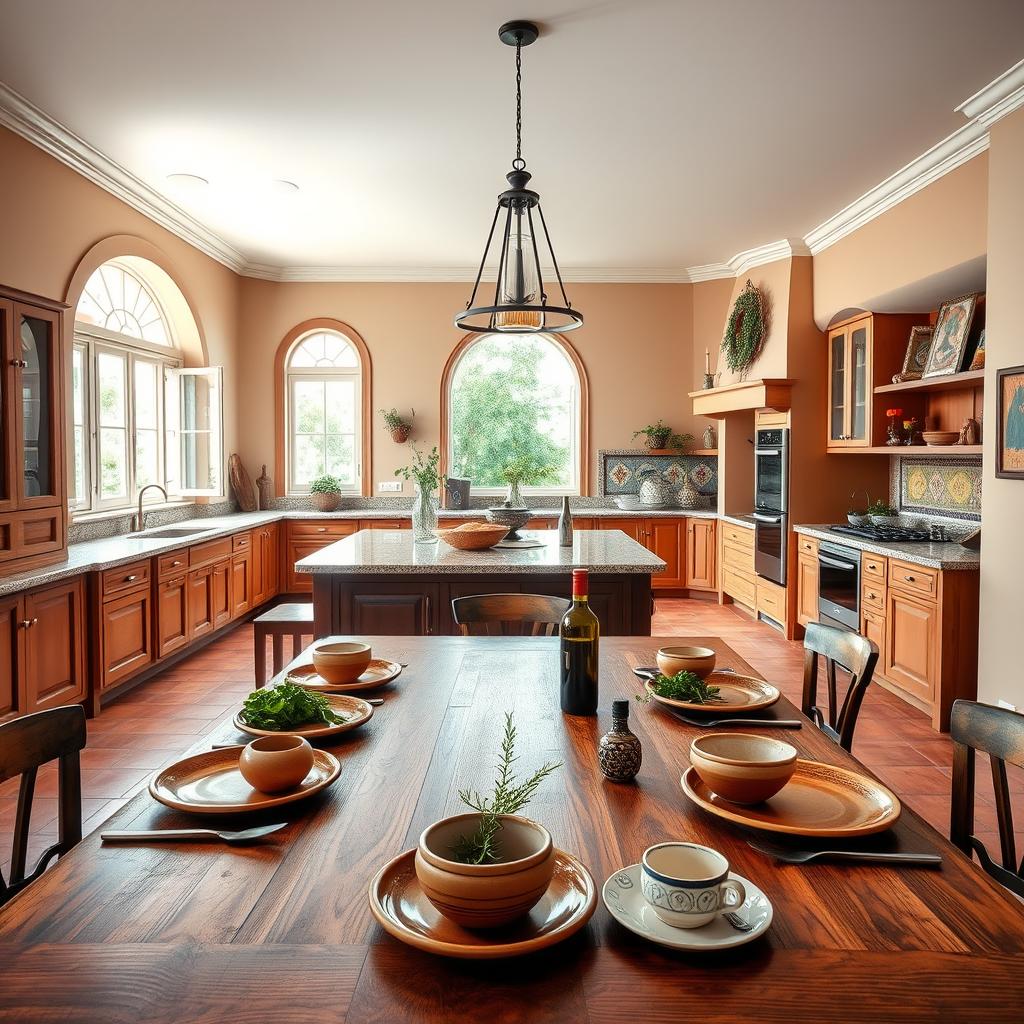
Start by imagining how people move through the space; flow will make or break the final result. We begin with a simple scaled plan that maps the working triangle, traffic lanes, doorways, and sightlines so focal points like an arched hood or patterned backsplash read clearly.
Map your space and flow
Allow 42–48 inches of clearance around the island and plan seating overhangs. Right‑sizing the island ensures it supports prep, seating, and storage without blocking movement.
Zone cabinetry for prep, cooking, and cleanup. Include space for paneled appliances and heavy‑duty drawers for cookware. Match appliance capacity to hood ventilation for safe, efficient use.
Budgeting for impact
Invest where it shows: prioritize Saltillo or terracotta floors, hand‑painted or patterned tile at the range or sink wall, and exposed wood beams or plaster ceilings. These elements deliver high visual return.
- Place premium materials where hands and eyes land: backsplash, counters, and island faces.
- Save by using stock cabinet boxes with upgraded doors or hardware to get the look without full custom cabinetry costs.
- Sequence work to avoid rework: structural trades, plaster, flooring, cabinetry, countertops, tile, then fixtures and lighting.
Check floor structure for tile weight, underlayment, and in‑floor heating if desired. To set scope and refine budget, tap our planning tools and expert guidance at our Kitchen Hub or see a local example at Kirkland kitchen project.
mediterranean kitchen remodel style: step‑by‑step design moves that elevate your space
Start with key architectural moves that define the room and guide every material choice that follows.
Cabinets and wood tones: Choose substantial door profiles in walnut or dark stains. Add glass mullion doors to showcase ceramics and soften evening light. These cabinetry choices anchor the space and add immediate character.
Countertops and sinks: Pair marble countertops with closed-grain cabinet faces for contrast. Use a sculptural farmhouse sink or a copper apron-front sink at the cleanup zone for warmth and practicality.
Backsplash strategy: Make a patterned mosaic panel behind the range the focal point. Field other walls with handmade, organic tiles and extend tile to highlight arches or an elevated hood.
- Appliances and hoods: Specify hammered copper or plaster-clad hoods with arched silhouettes. Keep appliances paneled where possible to let finishes breathe.
- The island: Design a grand island with corbels, columns, and mixed storage. Include a prep sink, seating, and clear legroom for comfortable entertaining.
- Ceiling features & finishes: Expose wood beams or apply plaster for vaulted drama. Mix wrought iron and brass hardware to let patina add character over time.
Styling & palettes: Layer vintage boards, artisanal ceramics, and woven runners. For a bright take, use warm whites and ocean-hued tiles; for a traditional look, lean into deep wood and earthy tones. Keep a controlled color palette for cohesion.
Ready to plan? Explore ideas and book a consultation through our Kitchen Hub or review a real example at the Kirkland project. Start your project with Zove Homes today.
Conclusion
A thoughtful close ties architectural traits and everyday function into a lasting whole.
Keep focus on a few signature elements—artisan tile, a statement hood, terracotta floor or exposed wood beams—and let them repeat across the plan. This approach makes the design feel cohesive and earned while preserving everyday performance with durable countertops, smart storage, and reliable ventilation.
Whether you favor a rich, traditional take or a lighter, coastal-leaning approach, stay consistent with materials and palette so adjacent rooms read as one coordinated interior. For more ideas, see our Modern Kitchen Guide and a practical inspiration post on modern design ideas.
Ready to begin? Explore planning tools and book a consult at our Kitchen Hub—we’ll guide cabinets, countertops, layout, and sequencing end‑to‑end so your mediterranean kitchen gains lasting charm and everyday ease.


