
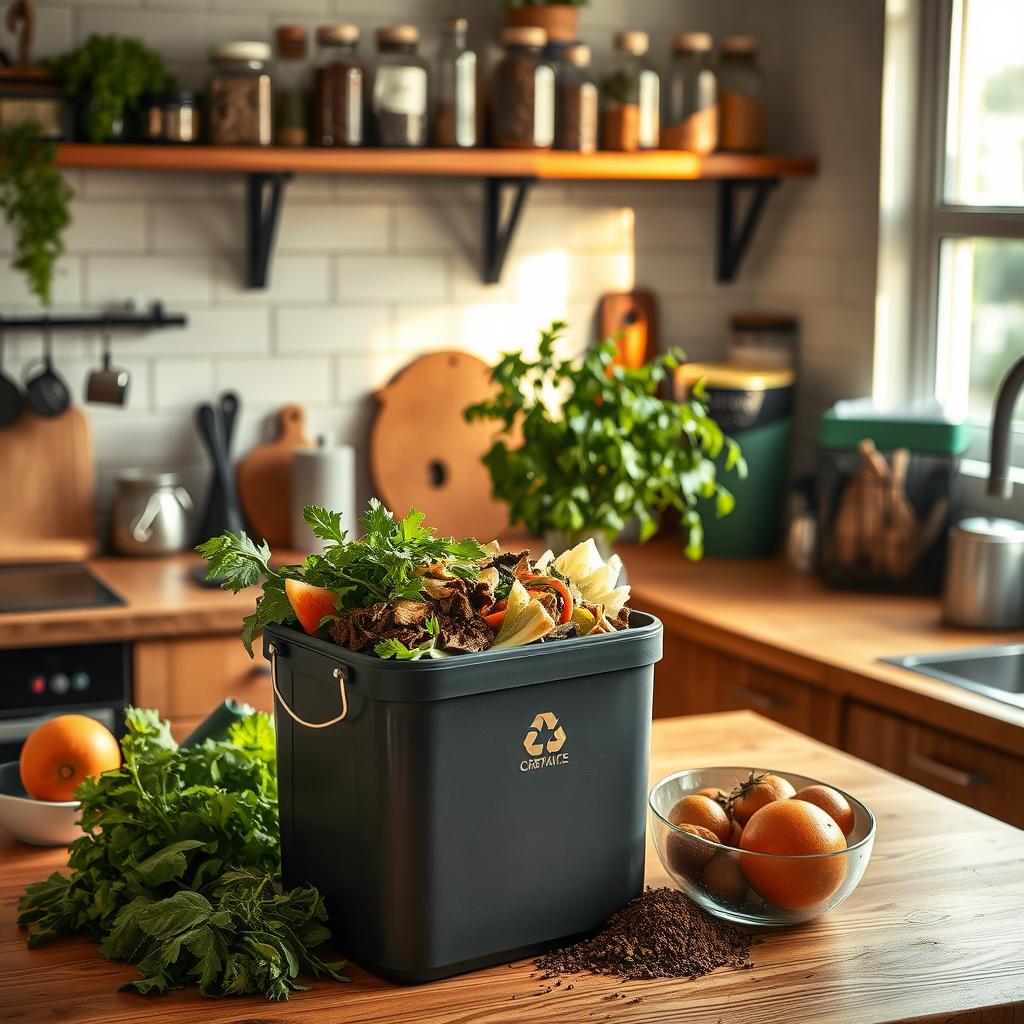
I still remember the small victory of turning a handful of scraps into rich, dark soil on my balcony. That moment changed how I see daily habits and inspired our design approach. We help homeowners fold sustainable routines into beautiful layouts so care feels simple and natural.
In our projects, we prioritize smarter flows for food and waste so you can keep surfaces clean and odors at bay. Containment, discreet caddies, and smart storage make diverting organics an easy part of your routine.
Turning scraps into a usable compost improves soil quality and cuts methane versus sending organics to landfill. We’ll show what to save, what to avoid, and how to right-size systems — from compact indoor setups to simple outdoor bins.
For broader design ideas and integrated sustainability tips, explore our main kitchen resource and planning guide at our kitchen page. If you want practical comparisons, see our notes on alternative systems here.
Key Takeaways
- Design-forward solutions make diversion easy and discreet.
- Finished compost improves soil as a valuable soil amendment.
- Diverting food reduces your household’s carbon footprint compared to landfill.
- Small, right-sized setups fit apartments and large homes alike.
- We balance style and function so routines stay simple and tidy.
Why Composting Kitchen Waste Matters Right Now
Every year, American households send tens of millions of tons of edible material to landfills—an avoidable drain on resources and climate health.
About 40 million tons of food are landfilled in the U.S. annually, roughly 15% of municipal solid waste, and food makes up about 21–24% of landfill content. Moving those organics out of landfill conditions cuts methane emissions and helps sequester carbon back into soil.
We put waste reduction first: smarter shopping, portion planning, and safe food storage reduce what needs handling. For what remains, responsible composting and local recycling close the loop and return nutrients to green spaces.
- Reducing food loss has the biggest climate benefit; treat composting as the next step.
- Shifting organics from landfill to composting lowers methane and creates useful compost for gardens.
- Household habits, when scaled, make a measurable difference—simple changes add up.
- Where home systems fall short, curbside organics programs can help and reinforce daily sorting behavior.
We design practical, attractive solutions so sorting becomes second nature—see our kitchen solutions for examples that make the routine clean and easy.
Composting Kitchen Waste Management: Principles, Benefits, and Setup Basics
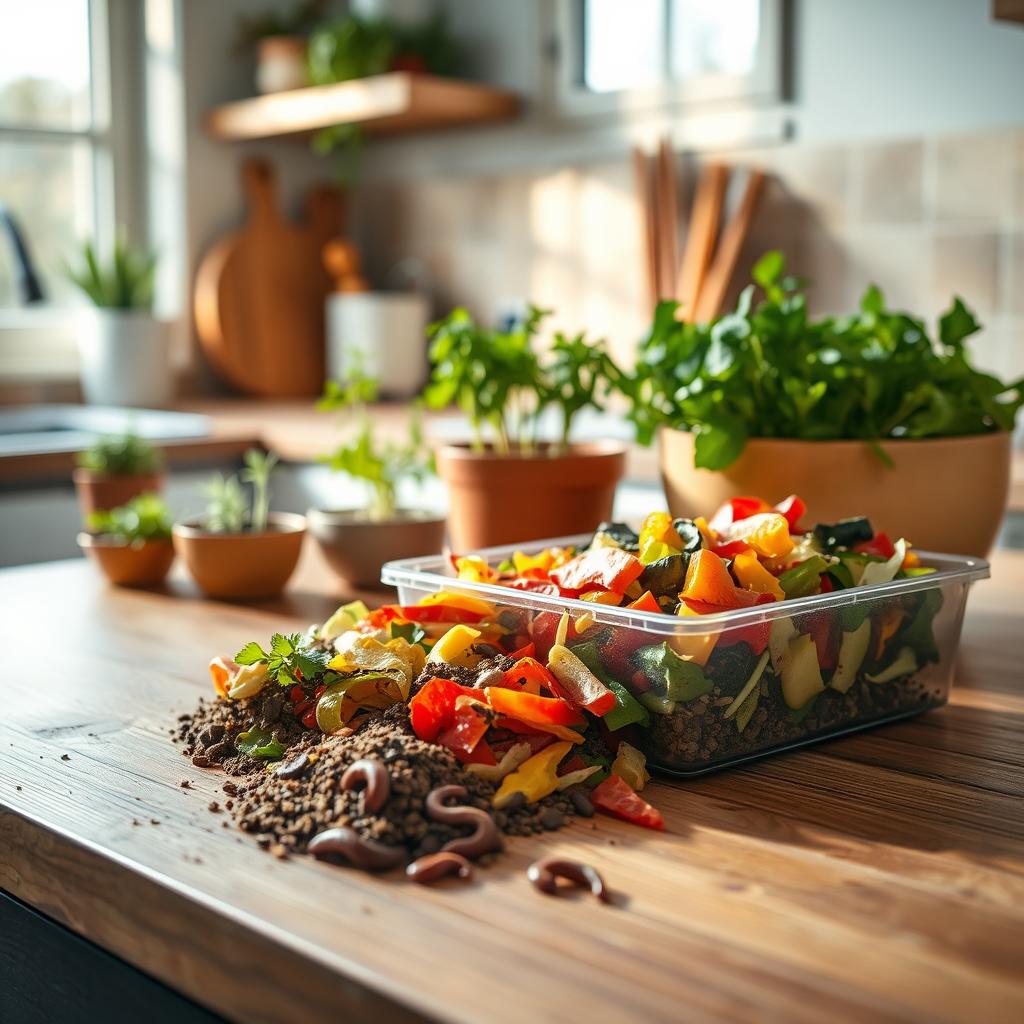
A small change in how we handle scraps can cut methane and return nutrients to soil. In practice, the goal is a tidy system that fits your routine and design.
From landfill methane to soil amendment: the environmental case
In landfill conditions, food can make methane. In aerobic systems, microorganisms transform organic matter into stable compost that improves soil structure and water retention.
Core elements: carbon, nitrogen, oxygen, and water
Effective composting balances carbon (browns) and nitrogen (greens) with adequate air and the right water content. Keep the mix moist like a wrung sponge and add structure so piles get airflow.
- Biology does the work: bacteria, fungi, and actinobacteria break down food and reduce pathogens.
- Practical setup: alternate greens and browns, size containers for your space, and plan access for turning.
- Design matters: we align storage and ventilation with your layout—see our kitchen page for integrated ideas: https://zovehomes.com/kitchen/.
When managed well, a small system cuts landfill impact and yields compost that helps plants thrive.
What Goes In, What Stays Out: Green and Brown Materials for a Healthy Compost
A reliable balance of green and brown materials is the secret to steady breakdown and a tidy system.
Acceptable greens are everyday food scraps like fruit and vegetable peels, coffee grounds, tea bags without staples, crushed eggshells, small amounts of cooked grains, and fresh garden trimmings such as grass clippings and cut herbs.
Good browns include dry leaves, straw, shredded paper or cardboard, and wood chips. These carbon-rich materials create air pockets and absorb excess moisture.
- Greens to save: fruit and vegetable peels, coffee grounds, tea (filters removed), and small cooked food scraps.
- Browns to balance: dry leaves, straw, shredded paper/cardboard, and wood chips for structure and airflow.
- Simple rule: each time you add greens, cover them with browns to control moisture and suppress odors.
- Skip risky inputs: meat, dairy, oils, pet waste, diseased plants, seedy weeds, and non-biodegradables.
Keep a tidy staging area with a lidded caddy for greens and a small sack for paper bits. For design-friendly storage and discreet countertop caddies, see our solutions at https://zovehomes.com/kitchen/.
How to Start at Home: Choosing the Right Method for Your Space and Goals
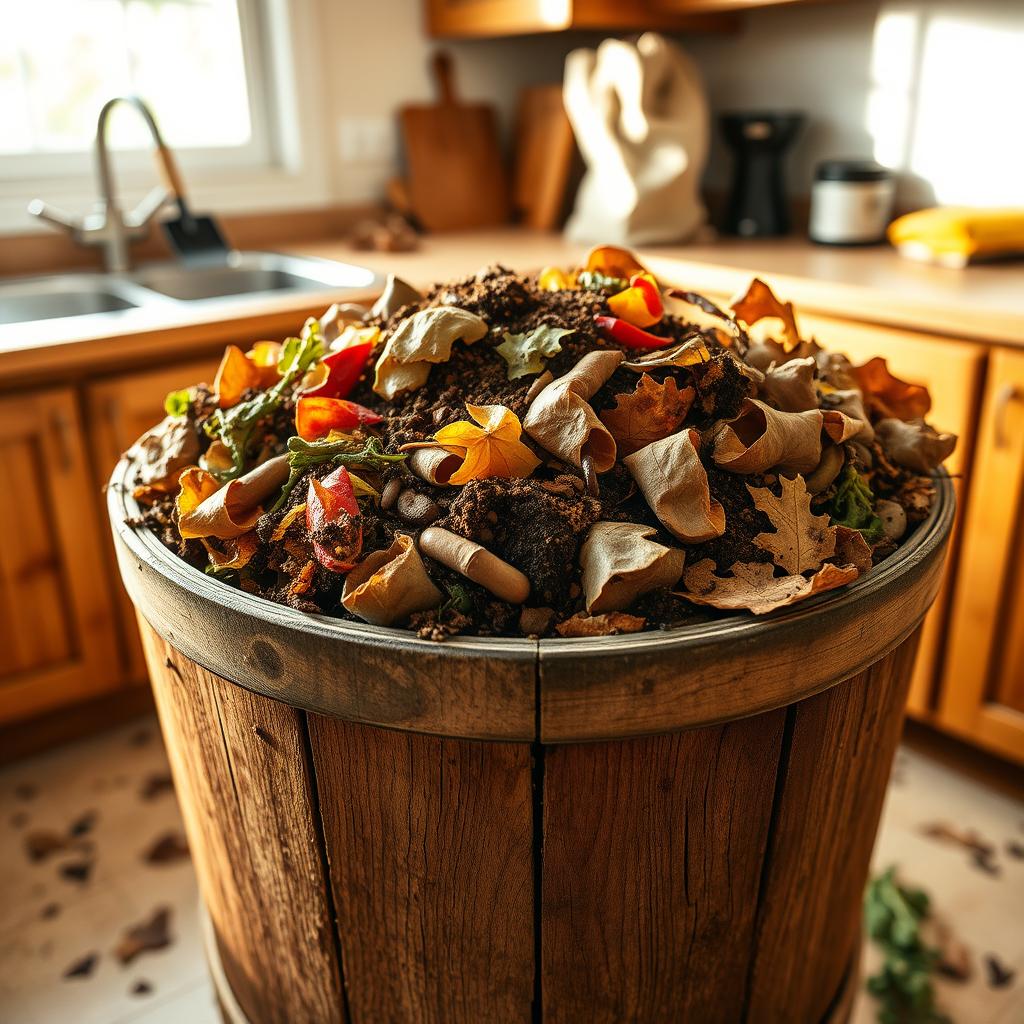
From a backyard pile to a small indoor worm bin, there are clear options for every home. We walk through four practical ways so you can pick the best fit for your space, tempo, and design goals.
Standard pile or compost bin
Pick a spot with drainage and partial sun. Start with a base of browns, add food scraps, then cap with more browns.
Turn periodically and keep the mix sponge-like for steady breakdown. A closed bin adds structure and helps deter pests while keeping edges neat.
Vermicomposting
Red wigglers in a ventilated bin turn scraps into rich castings. Use bedding like shredded paper or coir and avoid excess citrus and greasy foods.
This option fits apartments and indoor plant lovers who want fast, nutrient-dense results.
Bokashi fermentation
Bokashi uses an airtight bucket and inoculated bran for anaerobic fermentation. It prevents odors and is ideal for tight spaces.
When full, bury the fermented mix or add it to a regular system to finish breaking down into a useful soil amendment.
Trench or pit
Dig 8–12 inches, add food scraps, and cover with soil. This low-effort way decomposes in place with minimal odor and pests.
- Choose by space: outdoor piles or bins for yards; vermicomposting or Bokashi for indoors.
- Mix green brown inputs properly to keep processes steady.
- Workflow tip: keep a lidded caddy in the kitchen and empty it daily or every other day.
- Design tip: plan a pull-out bin or counter drop zone to streamline sorting—see our kitchen layouts at https://zovehomes.com/kitchen/ for inspiration.
Maintaining the Compost: Air, Water, Heat, and Time
Keeping a pile active is mostly about rhythm: the right moisture, occasional turning, and sensible inputs.
Moisture management: keep the mix like a wrung-out sponge. Partial shade helps prevent drying in hot weather. If the pile feels dry, add a little water; if it is soggy, mix in dry leaves or shredded paper.
Air and heat: turn your pile every few weeks to introduce air. That controls odor and speeds breakdown. Small piles may not need frequent turning, but a regular check helps avoid a stalled process.
- Balance carbon and nitrogen: aim near a 25:1–30:1 C:N ratio by alternating greens and browns.
- Chop larger pieces so materials break down faster and heat distributes evenly.
- Avoid fats and greasy food; cap fresh food scraps with dry leaves to deter pests.
Seasonal notes: composting slows in winter and resumes with warmth. In summer, watch moisture and add water or shade as needed.
Practical tip: use lidded caddies and ventilated bins for pre‑compost storage, and transfer often to keep interiors odor-free. For smart storage and ventilation choices, see our kitchen examples at https://zovehomes.com/kitchen/.
Beyond the Backyard: Community Programs and Commercial Composting Options
Community options range from curbside collections to apps that connect donors with local gardeners and farms.
Curbside green bins and drop-off sites make it easy to move food scraps from home to larger systems. Many U.S. cities keep interactive maps of drop-off sites, and platforms like ShareWaste match donors with nearby enthusiasts and farmers.
Curbside, drop‑off, and sharing platforms
- If backyard space is limited, use curbside programs, municipal sites, or sharing apps to route scraps to active composters.
- Farmers’ markets and community gardens often accept sorted inputs; confirm accepted amounts and packaging first.
Commercial methods and contamination control
Commercial facilities process large volumes with windrows, aerated static piles, or in‑vessel systems. These methods reach higher temperatures and can handle diverse inputs like meat and dairy when rules permit.
- Keep streams clean: remove plastics and metals so material stays in the system and avoids landfill diversion.
- Finished compost often returns to farms and gardens, closing the nutrient loop regionally.
Pair a reliable community option with a tidy sorting zone in your kitchen to make participation simple. When in doubt, check local program rules or resources such as the UC Cooperative Extension summary for Santa Clara County for program examples: community program details.
Conclusion
Design choices can make the path from plate to soil feel effortless and elegant. Keep a tidy sorting zone with a lidded caddy, then empty it regularly to your preferred bin or pile.
Composting complements waste reduction by diverting organics from landfill and producing useful compost for gardens and farms. Maintain sponge-like moisture, good air flow, and a steady mix of greens and browns for steady breakdown.
If home systems are tight, share what you can’t process through curbside programs or drop-off sites. For practical layout ideas and to book a consultation on concealed caddies and streamlined workflows, explore our kitchen design solutions and the importance of kitchen sorting, or visit our kitchen page.


