
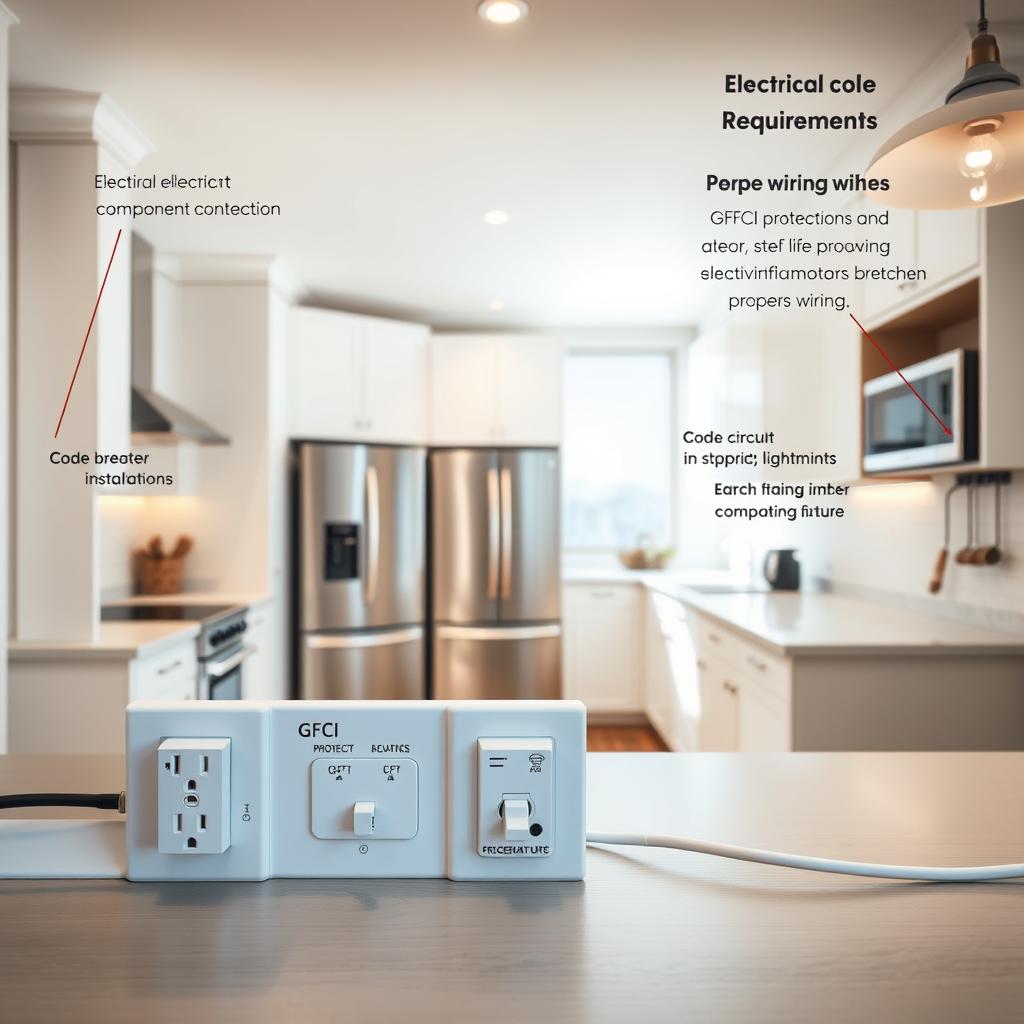
Have you ever wondered why some designs fail the first inspection while others sail through?
We start with a practical roadmap to how the National Electrical Code shapes modern kitchens and why following these rules improves daily function and safety at home. The NEC updates every three years, and those changes matter when planning a remodel.
In this guide I’ll summarize the most important requirements you’ll meet during remodeling: small appliance circuits, lighting loads, GFCI and AFCI protection, receptacle spacing, and dedicated circuits for major appliances. You’ll see how simple rules—like two 20‑amp small appliance circuits and receptacles no more than 48 inches apart—support safer, more usable spaces.
When you’re ready to turn rules into a beautiful, functional plan, we can help you from concept to inspection. Explore our full services at https://zovehomes.com/kitchen/ and let us guide your project to meet current codes with style.
Key Takeaways
- NEC updates every three years; staying current avoids surprises at inspection.
- Expect at least two 20‑amp small appliance circuits and strict receptacle spacing.
- Major appliances need dedicated circuits and GFCI/AFCI where required.
- Proper planning streamlines permits, inspections, and project timelines.
- Following requirements improves safety and daily function in your home.
Start Here: What the NEC Means for Today’s Kitchens
Understanding how national rules shape a space makes planning safer and more predictable. The National Electrical Code is developed by the NFPA and updated every three years to reflect new appliances, higher loads, and better safety science.
The NEC sets baseline requirements for outlets, GFCI protection near sinks, tamper-resistant receptacles, and circuit counts in modern kitchens. Municipalities then adopt those standards as electrical codes, sometimes with local amendments that change inspection steps in your area.
Older homes that receive a remodel must usually bring the altered space up to current standards. That means recent updates—GFCI expansion and AFCI coverage—often apply during renovations.
- We recommend early contact with your building department.
- Work with a licensed electrician to align plans with local rules.
- Bookmark our planning page for checklists and expert help: https://zovehomes.com/kitchen/
Planning Your Remodel to Code: Load, Panel Capacity, and Circuit Map
Sizing panel capacity early saves time and avoids last-minute rewires. We begin by estimating load and tallying major and small appliance needs. This gives a clear picture of power demand before demolition.
Modern projects often grow from two circuits to seven or more. Verify your main service for available breaker space and ampacity. If space is tight, adding a sub-panel keeps runs short and wiring tidy.
- We assess total load and confirm panel capacity, not just breaker count.
- We create a room-by-room circuit map showing dedicated runs for refrigerator, microwave, dishwasher, disposal, and range.
- Rough-in drawings align outlet and lighting locations with island and cabinetry placement to meet code requirements.
- A code-first plan reduces change orders and saves valuable time during rough-in and final inspection.
Plan your scope with our team—start at https://zovehomes.com/kitchen/ and request a code-first consultation if you want a smoother build.
Small Appliance Circuits and Countertop Power

A reliable plan for countertop outlets keeps appliances running smoothly and your prep area clutter-free.
Provide at least two 20-amp circuit runs dedicated to countertops and eating areas. These circuits keep toasters, blenders, and coffee makers from sharing a single feed and reduce nuisance trips.
All receptacles serving countertops require GFCI protection. Many local jurisdictions also require AFCI protection at the breaker or device; we follow the stricter option when adopted.
- Two dedicated circuits power common appliances without overload.
- Place outlets so no point on a countertop is more than 24 inches from a receptacle, meeting the 48-inch spacing rule.
- Mount receptacles below the 20-inch height maximum for convenient access and a clean look.
- For islands and peninsulas, we confirm surface dimensions and add discreet outlets that respect design while meeting requirements.
We balance appliance loads across the circuits and plan extra outlets where heavy-use devices live. See how we integrate code-compliant power with clean design at https://zovehomes.com/kitchen/.
Outlet Placement Rules You Can’t Ignore
A thoughtful outlet plan balances safety, aesthetics, and real-world appliance habits. We set placement to keep counters clear and daily tasks fast. Good layout also reduces nuisance trips and wear on cords.
Countertop receptacles must be spaced so no point is more than 24 inches from a device, and the maximum gap between outlets is 48 inches. Receptacles mount less than 20 inches above the countertop and must never be face-up on horizontal surfaces. Any countertop section 12 inches or wider requires a receptacle to support small appliances and prep zones.
Practical placements we follow
- We measure every run to meet the 48-inch spacing rule and prevent long cords across the room.
- Devices sit below the 20-inch height threshold for clean lines and easy access on the backsplash or wall.
- Every 12-inch or wider countertop segment gets a receptacle; no face-up outlets are placed on counters.
We also align outlets with tile lines, integrate hidden solutions for full-height slabs, and place protected devices inside appliance garages. These steps meet code requirements and make your kitchen work beautifully—partner with us at https://zovehomes.com/kitchen/.
GFCI and AFCI Protection: Shock and Fire Safety in Wet, High-Load Areas

Protecting wet and high-load zones starts with the right protective devices and a clear layout. We specify devices that act fast and place them so protection covers the most vulnerable areas.
GFCI receptacles are required for all outlets serving countertops and near sinks. These ground-fault devices trip within milliseconds to stop a shock and are a fundamental layer of safety.
- We use GFCI to protect users in wet areas and along counters, dramatically reducing shock risk during everyday tasks.
- AFCI protection guards against arcing faults that can start fires; we specify this for lighting and receptacle circuits where required.
- When allowed, dual-function breakers combine GFCI and AFCI to simplify panels and maintenance.
- We place devices or breakers to protect downstream outlets while avoiding nuisance trips from appliance startup currents.
- Compatibility checks with smart switches and dimmers prevent false trips and preserve protection.
- Clear panel labels and a written protection plan help homeowners and inspectors verify compliance with the current electrical code.
For device selection and breaker upgrades, we can specify the right protective equipment and review the plan with your inspector to ensure full compliance and ongoing safety in your kitchens. See our recommendations and service options at https://zovehomes.com/kitchen/.
Dedicated Circuits for Major Appliances
Major appliances demand their own power paths to keep performance steady and inspections simple.
We size and route every appliance run to meet the latest safety and installation needs. A clear breaker plan prevents nuisance trips and protects other devices on the same panel.
Dishwasher and Disposal
The dishwasher needs a dedicated 15–20A, 120V run and has required GFCI protection in recent cycles. The garbage disposal also gets its own 15–20A circuit to handle startup current without dimming lights.
Microwave and Refrigerator
Microwaves call for a dedicated 20A, 120V circuit wired with 12/2 cable; AFCI and sometimes GFCI rules apply depending on jurisdiction. Refrigerators commonly use a dedicated 20A circuit to avoid food-loss from shared loads.
Range and Wall Ovens
Electric ranges and ovens require a 50A, 240V dedicated circuit with properly sized conductors. This feeder should not be GFCI protected and must follow manufacturer specs.
- We assign a dedicated circuit to each major appliance to ensure steady power.
- Where allowed, we evaluate dishwasher/disposal sharing under the 80% load rule.
- We label breakers clearly and verify wire and cable selections with your inspector.
For detailed wiring guidance and a practical wiring overview, see our partner resources and consult us at Zove Homes. For further background, review a concise wiring overview.
Kitchen Lighting Circuits and Fixture Choices
A thoughtful plan for fixtures and controls turns flat illumination into layered design. We begin with at least one dedicated 15‑amp, 120V lighting circuit to feed ceiling fixtures, recessed cans, and under‑cabinet task lights. This main feed is not on GFCI but often requires AFCI protection where adopted.
Minimum one 15-amp lighting circuit and switch placement
We place switches at primary entries for usability and to meet inspection expectations. Each major zone gets its own control so residents can tailor brightness.
Layering general, task, area, and accent lighting to code
- We start with at least one dedicated lighting circuit, then add capacity for layered lighting and dimming control.
- General lights provide broad coverage; under‑cabinet task lights remove shadows for prep and work areas.
- Accent and area fixtures highlight sinks, ranges, art, and display shelving for a balanced ambiance.
- Our wiring plans separate lighting and appliance circuits so lights stay on if an appliance trip occurs.
We specify fixtures rated for wet or damp environments and match drivers to dimmers for flicker‑free performance. Let us design a layered lighting plan that meets safety and elevates your space: https://zovehomes.com/kitchen/.
Tamper-Resistant Receptacles, Grounding, and Bonding
Child-proof outlets and solid grounding are small details that make a big difference in home safety. We specify TR receptacles across accessible areas and verify grounding continuity as part of our standard scope.
Tamper‑resistant (TR) devices are required on all 15A and 20A accessible receptacles in the room. TR shutters open only when both blades insert, blocking foreign objects while preserving normal plug use.
Child-safe outlets across the space
We install TR‑rated outlets at counters, walls, and halls to meet these modern requirements. Each device stays flush with the wall and complements finishes for a clean look.
Grounding and bonding essentials
- We confirm continuous equipment grounding conductors and bond metal boxes, pipes, and enclosures.
- Correct grounding creates a low‑impedance path so fault currents clear the breaker quickly instead of energizing a metal surface.
- We document grounding and bonding for inspections and future service work, and recommend targeted wiring upgrades where needed.
For practical upgrades and transparent cost guidance, see our notes on electrical work costs and learn how we combine protection, wiring reliability, and polished wall layouts to keep your space safe.
kitchen remodel electrical code for Older Homes: Upgrades, Wiring, and Compliance
Bringing an older space up to modern safety and capacity starts with a careful inspection. We begin with a condition assessment to find cloth‑insulated wire, ungrounded outlets, and limited panel space.
Rewiring, adding circuits, and replacing outdated two‑prong outlets
Expect new runs for a dishwasher, refrigerator, and microwave. We install dedicated circuit feeds and update small appliance circuits to meet code requirements.
- Replace two‑prong outlets with grounded, tamper‑resistant receptacles and add GFCI/AFCI protection where required.
- Verify wire size and cable routing for safe power and long‑term reliability.
- Check panel capacity; add a sub‑panel when main service lacks spare spaces.
Permits, inspections, and working with a licensed electrician
Permits and inspections are typically required. We prepare a permit package with circuit schedules and device legends to save time at inspection.
Future‑proofing for smart appliances and added capacity
We plan extra capacity and cable pathways for charging stations and smart appliances so you won’t need expensive rewiring in a few years.
Bring your older kitchen up to today’s standards with a code‑first plan: https://zovehomes.com/kitchen/.
Conclusion
A thoughtful finish ties every circuit, outlet, and fixture into a reliable, beautiful whole.
We follow modern NEC guidance so you get at least two 20‑amp small appliance circuits, GFCI protection at countertops, AFCI where required, tamper‑resistant outlets, and dedicated feeds for major appliances. Receptacle spacing, heights, and proper wire sizing keep daily use safe and simple.
Our team maps every circuit and lighting zone to your cooking and entertaining habits. We balance loads, protect wet areas with GFCI protection, and specify dedicated circuit feeds for dishwasher, disposal, microwave, refrigerator, and range so performance meets inspection expectations.
Ready to design and build a code‑compliant, stunning kitchen? Schedule your consultation at https://zovehomes.com/kitchen/ and we’ll guide you from first sketch to final inspection.


