

Have you ever wondered if the alarms in your cooking space can tell the difference between a burned toast and a real fire?
We open with a curated product roundup to help you choose the right detectors and alarms for a busy, modern kitchen. Our focus is on devices that offer fast alerts while resisting everyday cooking triggers.
We value practical app features and clear safety benefits. The Kidde Smart Smoke + Carbon Monoxide Alarm, for example, sends smartphone alerts, offers app-based false alarm cancellation, and interconnects with compatible Kidde units.
The unit supports location naming, timed testing from the app, and limits low-battery alerts to daytime. It uses replaceable AA batteries and complies with UL 217 edition 9—small details that matter when price and performance guide real choices.
For handpicked product lists and install guidance, explore our Kitchen hub: https://zovehomes.com/kitchen/.
Key Takeaways
- We focus on practical safety and simple app controls to reduce nuisance alerts.
- Kidde and First Alert offer reliable performance and balanced price points.
- App-based false-alarm cancellation and location naming improve real-world usability.
- Hardwired options help meet code and interconnect across a home for broader protection.
- Replaceable batteries, UL compliance, and periodic cleaning cut down false alarms and extend device life.
Why smart smoke detectors matter most in the kitchen
Households face unique risks near stoves and ovens that demand clearer, faster warnings. Newer units built to UL 217 edition 9 better separate harmless cooking aerosols from hazardous smoke while still reacting quickly to flaming and smoldering fires.
Common kitchen risks:
- Kitchens generate frequent smoke and steam that often cause nuisance alarms; we favor models with improved discrimination to cut false alerts.
- Grease fires grow fast and modern materials burn quicker, so alarms must detect both flaming and smoldering events reliably.
- Interconnected devices make sure an event in the cooking area sends alerts across the whole house — vital for nighttime protection.
App-based hush and location-aware features add convenience without reducing safety. When cooking smoke trips an alarm, an app can silence nuisance alerts so you don’t have to climb ladders or remove power to the unit.
We also account for carbon monoxide risks from nearby fuel-burning appliances and advise pairing smoke coverage with CO protection where appropriate. Regular test routines and smart placement near the kitchen help minimize false alarms while preserving early detection.
For our curated kitchen picks and placement guides, visit our Kitchen hub: https://zovehomes.com/kitchen/
Editor’s top picks for 2025 smart smoke and carbon monoxide protection
Our editors selected models that balance reliable detection, practical integrations, and clear value. Below are concise highlights to help you compare price, features, and installation options.
Kidde Smart Smoke + Carbon Monoxide Alarm
Top overall: fast alerts, hardwired reliability, and app hush that cuts nuisance alarms. This model meets UL 217 edition 9, supports location naming, app-based testing, and limits low-battery notifications to daytime.
Kidde with Ring compatibility
Good for Alexa households. It adds Ring/Alexa alerts, optional pro monitoring, and real-time notifications while keeping the same dependable hardwired performance.
First Alert with Nest integration
Battery-powered combo with dual detection for smoke and carbon monoxide. Great for Google Home users who want flexible placement without wiring constraints.
SimpliSafe
Integrates with SimpliSafe security apps and offers optional monitoring. Ideal if you want a DIY path that ties fire alerts into an existing security system.
Budget standout: First Alert Dual Sensor
- Under $20, reliable flaming and smoldering response.
- No app features, but strong basic performance for the price.
Shop our curated kitchen picks and compare models by price and features at https://zovehomes.com/kitchen/.
smart smoke detector kitchen: what to look for right now
Today’s household materials and frequent cooking fumes demand units that sort harmless aerosols from real hazards. We focus on clear, practical criteria so you get fewer nuisance trips and faster warnings when a real fire starts.
UL 217 edition 9 sensitivity
UL 217 edition 9 sensitivity and smarter cooking smoke discrimination
Choose a model that meets UL 217 edition 9. This standard improves sensitivity to modern materials and helps classify cooking aerosols versus dangerous smoke.
That extra discrimination reduces false alarms without slowing response to smoldering or flaming events.
App-based false alarm cancellation and location-aware alerts
Prioritize an app with quick hush controls and location naming so you can silence nuisance alerts from the counter. Kidde’s current model supports app hush, room naming, and in-app tests.
Also check for whole-home interconnectivity, offline and end-of-life alerts, and adjustable low-battery notifications that limit overnight chirps.
- UL 217 edition 9 compliance for better cooking discrimination
- App hush, location-aware alerts, and in-app testing
- Interconnectivity, offline warnings, and daytime-only low-battery notices
Explore our Kitchen hub for current picks tested against nuisance alerts: https://zovehomes.com/kitchen/
Smoke vs. carbon monoxide vs. combo detectors: the difference that saves lives
Choosing the right alarm means knowing how flaming blazes, slow smolders, and odorless gases behave.
Smoke units respond to visible combustion particles from flaming and smoldering fires. Flaming fires trigger fast, high-intensity alerts. Smoldering fires produce thin, lingering smoke that needs sensitive detection.
Carbon monoxide is colorless and odorless. It builds silently from incomplete combustion. Reliable coverage must alert at lower exposures (around 100 ppm) and at high, dangerous levels (about 400 ppm).
- Pure smoke units work well near active cooking zones to lower nuisance trips.
- Combo devices pair both functions, saving space and simplifying upkeep.
- Separate CO alarms let you place gas sensing per manufacturer guidance for best coverage.
We recommend combos when you need fewer mounts across floors and want simpler maintenance. Brands like First Alert offer dual detection options that balance coverage and convenience.
Want a tailored plan? See our room-by-room recommendations and picks at https://zovehomes.com/kitchen/ to decide whether a combo or separate approach fits your home and local code.
Power options explained: hardwired, battery-powered, and plug-in models
The way a unit is powered determines its reliability during outages and its placement options. Choosing the right power path affects installation, maintenance, and whether a model meets local rules.
Meeting state requirements with hardwired units and backup batteries
Hardwired smoke units are common in newer or renovated homes. Many jurisdictions require them in specific rooms by code, and they usually include a backup battery so protection continues during outages.
- Battery-powered models give flexible placement. You can pick ones with replaceable cells or sealed 10-year batteries to cut upkeep.
- Plug-in options work where outlets exist, but they still depend on backup batteries that need scheduled replacement.
- When replacing older units, inspect existing wiring to see if interconnect wiring is present and whether a like-for-like swap is needed.
- Consider long-term costs: sealed batteries reduce chores over years while replaceable designs cost less up front.
We match recommendations to your home layout, ventilation, and local code. For vetted picks by wiring type and room layout, visit: https://zovehomes.com/kitchen/
Interconnectivity and whole-home alerts for peace of mind

A linked alarm system can turn a single local event into a clear, whole-house warning in seconds.
Interconnectivity means safety across your home. If a unit near the stove senses trouble, alarms throughout the house sound so sleepers and remote occupants get time to act. Kidde’s smart model can also push a phone notification with the location if you configure naming.
We favor models that work with both new and legacy devices so you can upgrade in stages without replacing every unit. App-fed alerts keep you informed when you’re away, letting you call a neighbor or emergency services faster.
- Location naming reduces confusion during an event.
- Wired interconnects suit remodels; wireless links work for retrofits.
- Mixed-network compatibility helps protect against both smoke and carbon monoxide hazards.
Tip: Look for multi-pack bundles and connected solutions to get full coverage at a better price. Explore recommended interconnected packages at our Kitchen hub: https://zovehomes.com/kitchen/
Smart home integrations: Alexa, Google Home, Ring, and app ecosystems
Choosing platforms that fit your existing setup speeds response and reduces confusion during an event. We recommend starting with the hub you already use so alerts flow naturally into routines and security automations.
Match your ecosystem:
- Use Alexa or Google Home if you rely on voice routines. Kidde supports both for easy voice announcements and in-app alerts.
- If you use Ring, pick Kidde models with Ring compatibility for native notifications and optional pro monitoring in Ring’s app.
- Google-forward homes benefit from First Alert’s Nest integration and First Alert’s app for combined smoke and carbon monoxide alarm coverage.
- Prefer a security-first approach? SimpliSafe plugs into its security app so all alerts and optional monitoring appear in one place.
We weigh how each model handles push alerts, voice announcements, and in-app hush so the system feels cohesive during everyday cooking and critical events. Platform choice also unlocks automations—like turning on lights or unlocking doors to aid egress.
Trade-offs to consider: some devices skip a voice assistant, and apps vary in event history depth. Match features to how you want to receive alerts and who manages your home security.
Find picks that match your ecosystem and kitchen layout at our hub: https://zovehomes.com/kitchen/
Pricing, value, and lifespan: what to expect over 10 years
Over ten years, upfront price and a device’s maintenance pattern shape its real value. We map out entry, mid, and premium tiers so you can see which features matter most over the device life.
Entry: Basic models cost least but often lack app hush, interconnect, or platform integrations. They work for tight budgets but may need battery swaps every year.
Mid: Mid-tier models add wireless linking, better false-alarm resistance, and sealed batteries in some cases. These are solid choices for most homes and often hit the best features-per-dollar balance.
Premium: Expect advanced interconnectivity, broader ecosystem support, and sealed 10-year batteries. Over years, fewer replacements and less maintenance can justify the higher price.
- Hardwired units with backup battery often give the best long-term value when local code allows.
- Sealed 10-year batteries cut recurring costs; replaceable cells add small yearly expenses.
- Combo smoke carbon monoxide models reduce total device count and simplify upkeep.
We compare Kidde and First Alert on features and lifecycle alerts to help you plan replacements before end-of-life notifications leave gaps. For current prices, bundles, and timing advice, see our curated deals and bundles at current kitchen picks and the Wirecutter review of top options here.
Real-world performance and testing methodology (past benchmarks)
Our testing blends controlled lab exposures with everyday cooking scenarios to show real performance.
CO latency checks:
CO detection latency at 100 ppm and 400 ppm
We expose units to 100 ppm and 400 ppm carbon monoxide to measure alert time and consistency.
Fast warnings at 400 ppm are critical; reliable alerts at 100 ppm protect against prolonged low-level exposure.
Flaming vs. smoldering trials and consistency
We run flaming and smoldering tests to judge how quickly alarms detect different fires.
Some models spot flaming events fast but lag on smoldering. We score consistency across both scenarios.
False alarm resistance in cooking scenarios
Nuisance resistance is a top priority. We simulate frying and toast tests to check if normal aerosols trigger alerts.
- We log false positives and adjust placement to reflect real use.
- Interconnectivity is verified so linked alarms and phone notices trigger together with clear location labels.
- Power tests confirm backup cells keep devices online during outages and apps report offline status.
Lab-derived findings shape our picks, balancing sensitivity, speed, and practical features like app hush. See test-influenced recommendations at https://zovehomes.com/kitchen/.
Installation and placement in and around the kitchen
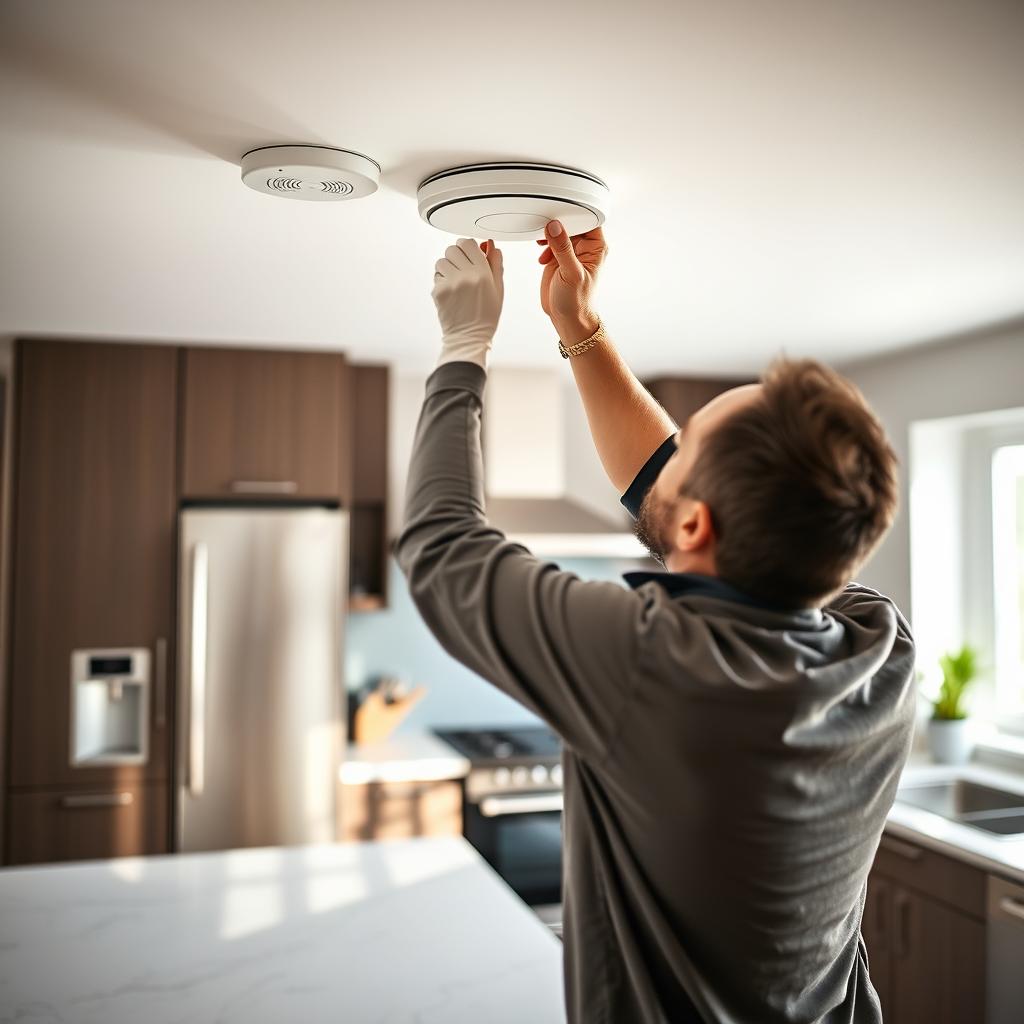
Where you mount alarms matters as much as which model you buy. Thoughtful placement reduces nuisance beeps while keeping early warnings loud and clear across the home. Interconnected systems and UL 217 edition 9 improvements help, but location still drives real-world performance.
Optimal locations near kitchens to reduce nuisance alarms
Place smoke alarms just outside the cooking zone or in an adjacent hallway rather than inside the cooking area. This cuts false triggers from steam and brief cooking aerosols yet keeps detection close for fast notification.
Height, spacing, and avoiding drafts, vents, and steam
Mount per the manufacturer: ceilings are preferred, and keep units away from HVAC registers, windows, or direct drafts. Avoid areas with frequent steam or grease that can trigger nuisance alerts.
- Complement smoke coverage with proper carbon monoxide placement if fuel appliances exist.
- Choose a form factor and mounting plate that fit your ceiling or wall material for a secure, code-compliant install.
- Hardwired or plug-in units with backup power stay active in outages; interconnected installs ensure all alarms sound during an event.
- Test each device after install—use the app when available to confirm naming and routing.
Note: For layout diagrams and recommended products by room and plan, see our Kitchen hub: https://zovehomes.com/kitchen/
Maintenance that prevents false alarms and extends device life
A little monthly care can cut false alerts and extend a unit’s useful life. We recommend a short, repeatable routine so protection stays reliable without adding chores.
Dust control, sensor cleaning, and periodic testing
Start with vents and sensors. Kidde notes dust on sensors causes many false trips. Regular vacuuming or a short blast of compressed air keeps sensors clear.
Use the app to run a scheduled test so you avoid climbing on ladders to press a button. App-based testing also shows if interconnects and devices report correctly.
- Vacuum or use compressed air to clear dust and grease from vents and sensors.
- Replace or recharge batteries on schedule and enable daytime-only low-battery alerts.
- Watch app notifications for offline status and end-of-life reminders to plan timely replacement.
- Log maintenance dates to track swaps, testing, and cleaning cycles — it saves the hidden price of nuisance trips.
Find our maintenance checklist and supply recommendations: https://zovehomes.com/kitchen/
Battery vs. sealed 10-year vs. replaceable AA: choosing the right power strategy
Power strategy affects maintenance, nuisance chirps, and long-term cost more than many buyers expect.
Choose between replaceable cells or sealed packs based on how often you want to climb a ladder and swap parts. A sealed 10-year unit removes most chores and fits rentals or secondary rooms well.
What to weigh:
- Sealed 10-year designs simplify ownership and cut routine visits; they often provide the best long-term life.
- Replaceable AA or 9V options are cheap up front and easy to source, but you must swap them annually to avoid downtime.
- Hardwired and plug-in models still rely on backup batteries; schedule replacements so smoke coverage never lapses.
- We compare how each strategy changes total price over device life and favor models that pair app reminders with battery status.
For product picks by power type and maintenance tips, see our battery guide and our curated selections at https://zovehomes.com/kitchen/.
Code, compliance, and US safety standards homeowners should know
Local building codes shape which alarms you must install and where they belong in your home. We walk through the common rules so you can choose compliant products and pass inspections without surprises.
State and local rules on hardwired, interconnect, and placement
- Check local code: many jurisdictions require hardwired smoke units in bedrooms, halls, and near cooking areas.
- Interconnectivity—wired or wireless—is often mandated in new builds or major renovations; pick models that interoperate with legacy wiring or approved wireless links.
- When carbon appliances are present, a certified carbon monoxide alarm or a smoke carbon monoxide combo must be placed per manufacturer guidance.
End-of-life alerts and required replacement intervals
Most devices reach end-of-life around 10 years and must be replaced to remain code-compliant. Choose units with app-based end-of-life warnings and daytime-only chirp settings to simplify upkeep.
Practical tips for compliance
- Keep backup batteries in hardwired installs so coverage continues during outages.
- Confirm your chosen detectors work together; our picks from Kidde and First Alert align with common US standards and inspection checklists.
- For code-aligned bundles and room-ready recommendations, visit our Kitchen hub: https://zovehomes.com/kitchen/.
Product comparisons at a glance: Kidde vs. First Alert vs. SimpliSafe
Comparing lead models shows which units favor wired reliability and which prioritize flexible placement. We focus on real trade-offs: power source, app maturity, and total price over the device life.
Kidde Smart Smoke + CO leads for hardwired reliability and advanced app controls. It meets UL 217 ed. 9, offers app hush, location naming, in-app tests, offline and end-of-life alerts, and uses replaceable AA cells.
Kidde with Ring is best if you want Ring/Alexa notifications and optional pro monitoring without swapping your whole security system. It keeps the same hardwired backbone with platform ties.
First Alert with Nest targets Google households. This battery-powered model pairs dual smoke carbon monoxide coverage with polished app integration and flexible placement.
SimpliSafe fits DIY users who value unified alerts in a single app and the option to add monitoring later. It pairs well when you already use SimpliSafe as your home security hub.
- Power and interconnect: Kidde favors hardwired installs; First Alert and SimpliSafe favor battery or wireless links.
- App maturity: Kidde and First Alert offer robust apps; SimpliSafe shines when tied to its security suite.
- Price vs. features: We weigh upfront price against long-term value and maintenance.
- Combo vs. separate: Combo units simplify installs near cooking zones and adjacent hallways.
See our quick-compare grid and current availability at https://zovehomes.com/kitchen/ for kitchen-focused picks and bundle pricing.
Plan your upgrade: recommended kitchen-focused bundles and budgets
A clear upgrade path pairs targeted hardwired units with a few battery-backed pieces for balanced protection. We design bundles that fit price points and typical home layouts so you get coverage where it matters most.
Good — Essentials: entry-priced products that cover the cooking zone perimeter and a central hallway. Pair an affordable smoke unit near the stove with a separate carbon monoxide alarm and a single mobile-notifying alarm in the hall.
Better — Balanced: a hardwired Kidde model by the stove plus interconnected hallway and bedroom units. This mix reduces nuisance alerts and adds app-based hush for everyday cooking fumes.
Best — Premium: platform-ready models (First Alert or Kidde) with combo smart smoke carbon and carbon monoxide coverage, voice-assistant ties, and sealed batteries for low maintenance.
- Price-aware entry kits for tight budgets and predictable replacement cycles.
- Mid-tier bundles that balance reliability, app features, and lifecycle cost.
- Premium packages focused on integrations, long-life power, and fewer installs.
Security-minded homeowners: consider a SimpliSafe kit to unify fire and security alerts with optional monitoring later. Shop curated bundles and current price guidance at https://zovehomes.com/kitchen/.
Shop smart, install smarter: get started with our curated kitchen safety picks
A focused shopping strategy saves money and ensures the right alerts reach the right people. We built a short list that balances nuisance resistance, app control, and code-aligned installation so you can buy with confidence.
Explore the main Kitchen hub for tailored safety upgrades
Compare platforms, features, and price at a glance to choose the best smart solution for your home and budget. Our curated products include Kidde smart models (including Ring-compatible), First Alert with Nest integration, budget First Alert Dual Sensor, and SimpliSafe kits for DIY security.
Ready-to-shop checklist
- Start with in-stock picks tuned for nuisance resistance and fast alerts.
- Match power type and interconnectivity to your layout for easier installs.
- Use our hub to map each product to ideal kitchen-adjacent placement and app features.
- Add preferred models to cart, then follow our install tips for a smooth, code-aligned setup.
CTA: Explore and shop our Kitchen safety picks: https://zovehomes.com/kitchen/
Conclusion
A focused upgrade lets you balance fast alerts with fewer nuisance interruptions.
We recommend pairing tested models and proper placement so smoke warnings react quickly to real fire while ignoring routine cooking haze. Kidde’s UL 217 ed. 9 unit and First Alert’s Nest-aligned combo show how rigorous testing — including carbon monoxide trials at 100 and 400 ppm and flaming/smoldering smoke checks — proves real-world performance.
Favor detectors with interconnect capability, app-based alerts, and clear end-of-life notices. Plan replacements on a 10-year cycle and use maintenance reminders to keep devices reliable over the years.
Keep price in perspective: consider ownership costs, not just the sticker. For actionable next steps and curated bundles, visit our Kitchen hub: https://zovehomes.com/kitchen/


